Como profissional de mercado da EPIC Powder, entendo a importância de estar na vanguarda da tecnologia de processamento de materiais. Para clientes na indústria de quartzo de alta pureza, compreender os métodos de purificação mais recentes é crucial para a produção de produtos superiores. Hoje, apresentaremos sete técnicas avançadas de purificação de quartzo que estão moldando o futuro do setor.
1. Tratamento a vácuo em alta temperatura
Este processo envolve o aquecimento do quartzo a mais de 1000 °C em vácuo a 0,01 MPa. A significativa diferença de pressão entre o interior e o exterior das inclusões gás-líquido faz com que elas se rompam. Simultaneamente, o ambiente de vácuo em alta temperatura é altamente eficaz na remoção de grupos hidroxila da areia de quartzo.
Durante a calcinação em alta temperatura, a estrutura cristalina do quartzo sofre uma transformação. Ela passa de α-quartzo para β-quartzo em temperaturas mais baixas e, com aumentos adicionais de temperatura, pode se transformar em cristobalita. Essa transformação da estrutura ocorre por meio de alterações nos ângulos de ligação Si-O. Quando a estrutura se deforma, seu volume se altera, rompendo o equilíbrio estrutural original dentro do cristal de quartzo. Elementos metálicos de impureza dentro da estrutura tornam-se instáveis, sofrem movimentação térmica, difundem-se para a superfície do cristal e, eventualmente, vaporizam.
Além disso, nessas condições, as inclusões gás-líquido se expandem termicamente. À medida que a estrutura cristalina do quartzo se deforma e seu volume se altera, essas inclusões se rompem, expondo as impurezas em seu interior. Impulsionadas pela diferença de concentração, essas impurezas são então vaporizadas e removidas, atingindo o objetivo da purificação.
2. Torrefação por Cloração
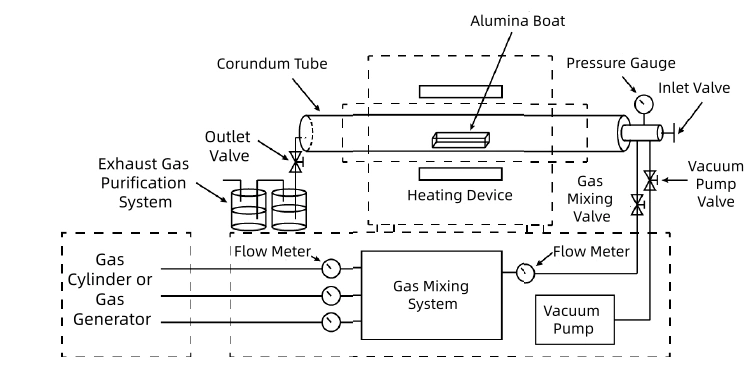
A calcinação por cloração, também conhecida como desgaseificação por cloração, utiliza o gradiente de potencial químico criado pelo gás cloro em alta concentração entre a superfície da partícula e seu interior para remover inclusões gás-líquido. Impurezas como metais alcalinos, metais alcalino-terrosos e inclusões residuais na superfície das partículas de quartzo reagem com o gás cloro em altas temperaturas para formar cloretos gasosos. Comparados a outros íons metálicos, o alumínio (Al) e o boro (B) apresentam menor reatividade. O fluxo de ar em alta temperatura remove esses cloretos voláteis, promovendo uma purificação profunda.
Trata-se de um processo de purificação profunda caracterizado por altos custos, capacidade de processamento limitada e certos riscos à segurança. Atualmente, apenas algumas empresas no mundo, como a Sibelco, sediada nos EUA, conseguiram aplicar essa tecnologia em escala industrial.
A matéria-prima para este processo deve atender a requisitos rigorosos. Normalmente, requer areia de quartzo purificada por métodos tradicionais até atingir uma pureza de SiO₂ de 99,99%, com impurezas totais inferiores a 100×10⁻⁶. O equipamento para calcinação por cloração é frequentemente projetado sob medida, visto que ainda não existe um padrão unificado e a tecnologia está em constante desenvolvimento e aprimoramento.
Dependendo do tipo de agente clorante, esse processo pode ser dividido em:
- Torrefação por Cloração Sólida: Utiliza agentes clorantes sólidos como NaCl, CaCl₂ e NH₄Cl.
- Torrefação por cloração a gás: Utiliza agentes clorantes gasosos como Cl₂ e HCl.
3. Separação Magnética Supercondutora
A separação magnética supercondutora é um método inovador de purificação mineral que introduz a tecnologia supercondutora no processamento de minerais. Materiais supercondutores podem gerar campos magnéticos extremamente potentes, capazes de magnetizar e remover até mesmo as impurezas mais finas e inclusões sólidas presentes no quartzo. Isso desempenha um papel vital na remoção de minerais estranhos e inclusões sólidas, tornando-se um processo e um equipamento essenciais na produção de quartzo de alta pureza.
Como um equipamento de processamento mineral de alta tecnologia, a essência de um separador magnético supercondutor reside no uso da tecnologia criogênica para resfriar a bobina até um estado supercondutor, aumentando drasticamente a intensidade do campo magnético gerado pelo ímã.
O princípio de funcionamento envolve o uso de fios supercondutores feitos de materiais como nióbio-titânio ou nióbio-estanho. Enrolamos esses fios em bobinas especiais e as colocamos em um criostato hermeticamente fechado. Usando imersão em hélio líquido e um sistema de refrigeração por condução, mantemos o ambiente operacional da bobina supercondutora em torno de -268,8 °C. Nessa temperatura, a resistência elétrica da bobina torna-se zero. Com resistência zero e condutividade infinita, a bobina pode transportar uma corrente muito maior e podemos aumentar o número de espiras. Ao enrolá-la em uma configuração solenoidal, obtemos um campo magnético de fundo extremamente alto.
4. Separação Eletrostática
A separação eletrostática utiliza eletricidade de alta voltagem para separar materiais. Este método de beneficiamento físico explora as diferenças na condutividade elétrica e nas constantes dielétricas dos materiais. As partículas ficam carregadas em um campo elétrico e, devido às diferenças nas forças eletrostáticas, na gravidade e nas forças centrífugas que atuam sobre elas, suas trajetórias no campo variam, possibilitando a separação.
Essa tecnologia oferece um processo simples e uma operação a seco, eliminando problemas relacionados à poluição e ao tratamento de águas residuais. Possui significativo potencial de desenvolvimento e amplas perspectivas de aplicação.
Nas últimas décadas, a separação eletrostática tem sido amplamente utilizada não apenas na concentração de minérios de metais raros, mas também no beneficiamento de metais não ferrosos, minerais não metálicos e até mesmo metais ferrosos. É também extensivamente aplicada na reciclagem de resíduos sólidos urbanos, com foco em áreas como a descarbonização de cinzas volantes, a separação de resíduos plásticos e a reciclagem de eletrodomésticos usados. Outras aplicações incluem a recuperação de recursos valiosos de resíduos industriais, como o processamento de escória metalúrgica de silício e cavacos de retificação de metais.
Como uma tecnologia de separação física consolidada, o equipamento de separação eletrostática é conhecido por sua confiabilidade, facilidade de controle e desempenho estável. Ele pode reduzir eficazmente as impurezas metálicas no quartzo de alta pureza, diminuindo a carga sobre os processos de purificação subsequentes e desempenhando um papel único na remoção de impurezas do quartzo.
5. Tratamento ultrassônico
O tratamento ultrassônico é seguro, eficiente e estável. Ultrassom refere-se a ondas sonoras com frequências entre 2×10⁴ e 10⁹ Hz. Quando as ondas ultrassônicas se propagam através da água (ou de uma solução), criam inúmeras zonas de compressão e rarefação. Isso leva à formação e ao colapso violento de inúmeras microbolhas (bolhas de cavitação), um fenômeno conhecido como cavitação.
Quando essas bolhas de cavitação implodem, geram temperaturas extremamente altas, superiores a 5000 K, e pressões elevadas em torno de 5×10⁷ Pa em um intervalo de tempo e espaço incrivelmente curtos. A taxa de variação de temperatura pode chegar a 10⁹ K/s. Essa implosão é acompanhada por intensas ondas de choque e microjatos que se deslocam a velocidades de até 400 km/h. Essas forças impactam violentamente as partículas de areia de quartzo suspensas no líquido, fazendo com que traços de impurezas em suas superfícies se desprendam rapidamente, promovendo assim a purificação.
6. Assar no micro-ondas
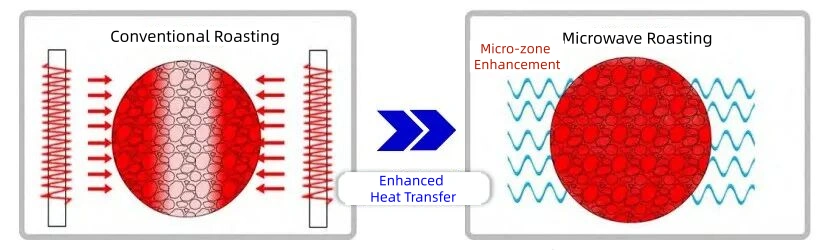
A torrefação por micro-ondas aproveita a diferença nas constantes dielétricas entre vários materiais. Quando o quartzo contendo inclusões gás-líquido é submetido à radiação de micro-ondas, as inclusões aquecem e vaporizam muito mais rapidamente do que a matriz de quartzo. Isso cria uma imensa pressão interna, fazendo com que as partículas de quartzo se fraturem e liberem efetivamente as inclusões gás-líquido.
7. Purificação de dopagem
A purificação por dopagem envolve a adição de elementos específicos ao quartzo em altas temperaturas. Esses dopantes reagem com os elementos de impureza para formar compostos que são facilmente solúveis em água ou ácido. Esses compostos solúveis podem então ser removidos por lavagem subsequente ou lixiviação ácida.
Em um estudo, pesquisadores partiram de pó de quartzo com um teor total de impurezas de 41,94×10⁻⁶. Eles o doparam sucessivamente com NaNO₃ e Al(NO₃)₃·9H₂O e, em seguida, o calcinaram a 900°C. A areia de quartzo purificada resultante apresentou impurezas totais reduzidas para menos de 25×10⁻⁶, atendendo ao padrão IOTA-Std.
Na EPIC Powder, temos o compromisso de fornecer soluções avançadas para a indústria de processamento de pós. Compreender essas tecnologias de purificação é o primeiro passo para otimizar sua linha de produção e obter resultados da mais alta qualidade. Para obter mais informações sobre nossos equipamentos e como eles podem auxiliar seus processos de purificação, entre em contato com nossa equipe hoje mesmo.
Pó épico
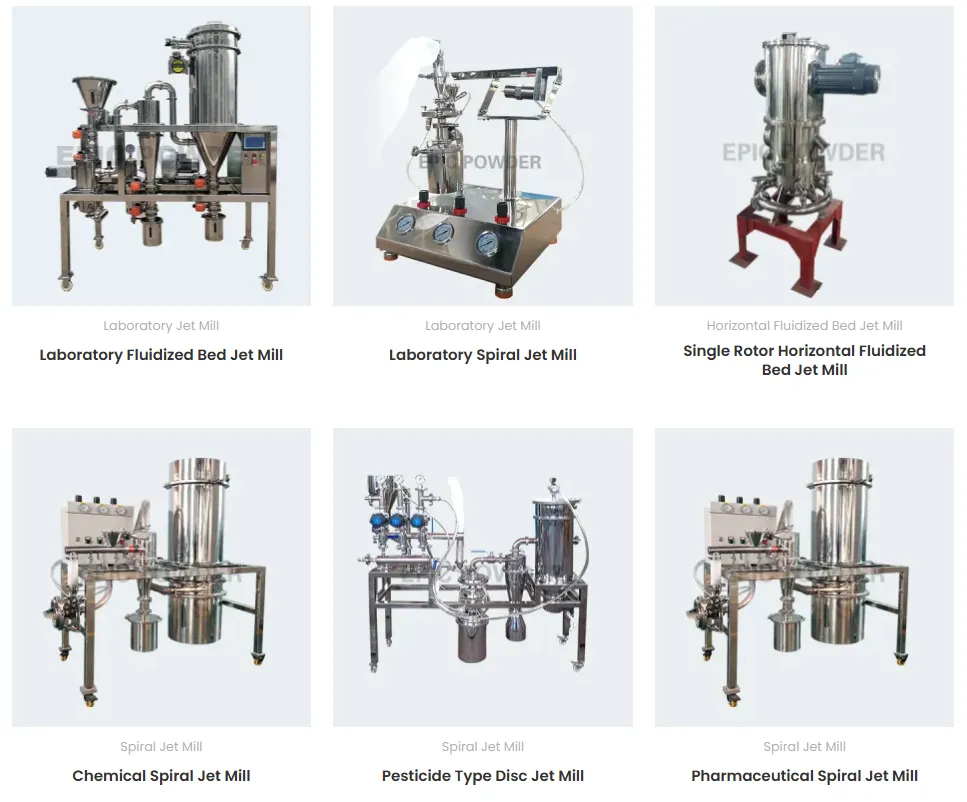
No Pó épicoOferecemos uma ampla gama de modelos de equipamentos e soluções personalizadas para atender às suas necessidades específicas. Nossa equipe possui mais de 20 anos de experiência no processamento de diversos pós. A Epic Powder é especializada em tecnologia de processamento de pós finos para as indústrias mineral, química, alimentícia, farmacêutica, entre outras.
Entre em contato conosco hoje mesmo para uma consulta gratuita e soluções personalizadas!

Obrigado pela leitura. Espero que meu artigo tenha ajudado. Deixe um comentário abaixo. Você também pode entrar em contato com o representante de atendimento ao cliente da EPIC Powder online. Zelda Para quaisquer outras dúvidas.”
— Jason Wang, Engenheiro-chefe