Lorsqu'il s'agit d'approvisionnement, de formulation et de promotion de matériaux à base de silice, les termes « poudre de quartz », « microsilice », « poudre de microsilice » et « fumée de silice » sont souvent utilisés indifféremment et semblent même désigner la même substance. Bien que leur principal composant chimique soit la silice (SiO₂), ces matériaux diffèrent considérablement par leur origine, leur méthode de préparation, la taille de leurs particules, leur structure cristalline, leurs propriétés physiques et leurs applications. Un mauvais choix de matériau peut avoir un impact direct sur la qualité et le coût du produit final.
Cet article utilise un tableau comparatif, quatre explications détaillées et une section FAQ pour vous aider à faire la distinction entre ces quatre matériaux.
I. Quels sont les quatre matériaux ?
1. Poudre de quartz
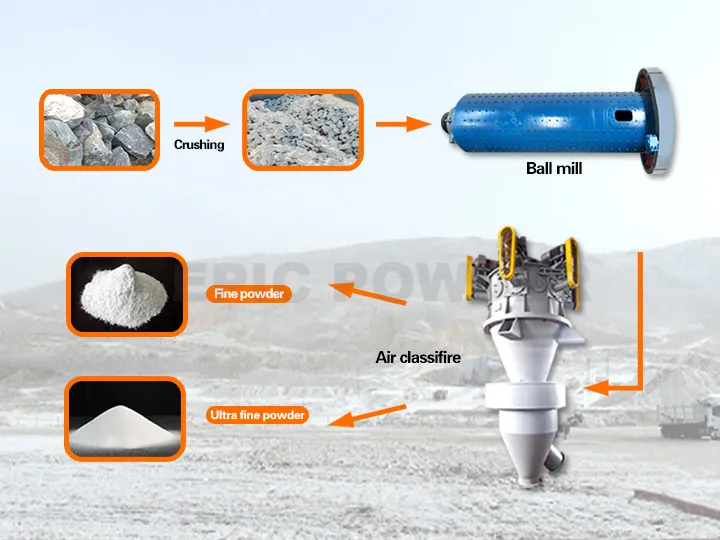
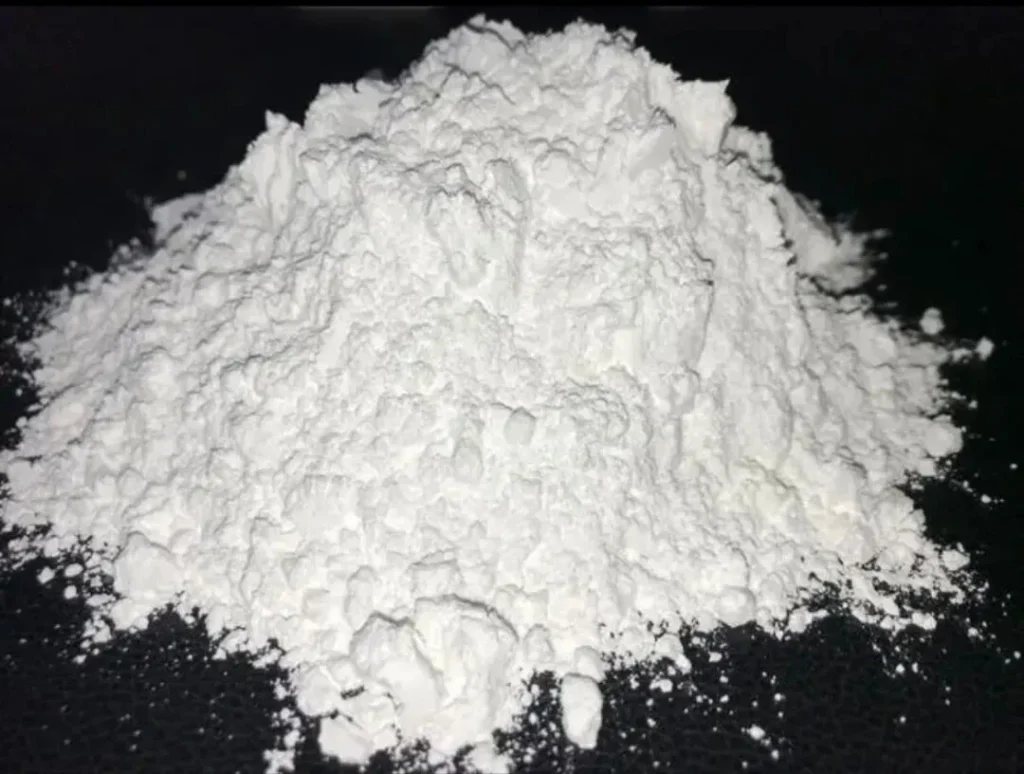
La poudre de quartz est une poudre cristalline de SiO₂ obtenue par broyage de minerai de quartz brut à l'aide de divers équipements de traitement. En d'autres termes, il s'agit de pierre broyée en poudre. Ses particules sont relativement grossières et, en tant que forme cristalline de dioxyde de silicium, elle présente une densité et une dureté élevées, ainsi qu'une bonne stabilité chimique.
2. Micropoudre de silice (également connue sous le nom de poudre de quartz ultrafine)
La micropoudre de silice est une poudre ultrafine obtenue par broyage de minerai de quartz jusqu'à un certain degré de pureté ou par des procédés chimiques pour produire une poudre fine de dioxyde de silicium. Comparée à la poudre de quartz, elle est plus fine, avec une granulométrie généralement inférieure à 1 micromètre ; sa structure cristalline est majoritairement amorphe et sa surface contient un grand nombre de groupes réactifs, ce qui la rend plus légère et plus poreuse.
3. Fumée de silice (également connue sous le nom de cendres de silice)
La fumée de silice, également appelée cendres de silice, est un sous-produit industriel. Elle provient des poussières de combustion des usines de fusion et d'incinération et se compose de fines poussières à forte teneur en silice. La teneur en SiO₂ représente environ 901 t/3 t de la masse totale des poussières de combustion émises, et les particules sont extrêmement petites, leur taille moyenne étant proche du nanomètre.
4. Noir de carbone blanc (noir de carbone blanc / silice précipitée ou de qualité aérosol)
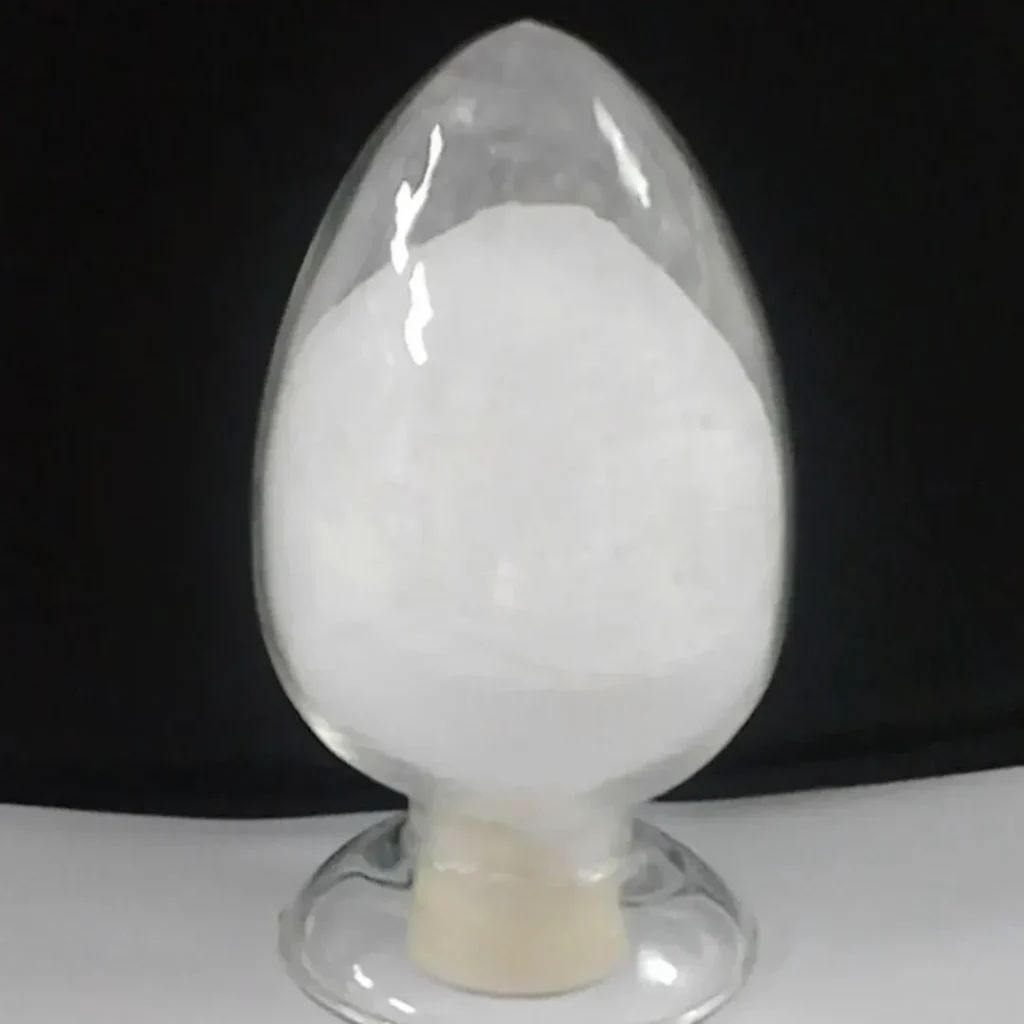
Le noir de carbone blanc est une poudre de silice ultrafine produite par des procédés chimiques tels que l'aérosolisation et la précipitation. Il se présente sous forme de poudre blanche, de granulés ou d'agglomérats irréguliers. On peut le classer en deux catégories selon son procédé de fabrication :
Noir de carbone blanc en phase aérosol : composé exclusivement de nano-silice, d’une pureté pouvant atteindre 99% et d’une taille de particules comprise entre 10 et 20 nm. Cependant, son procédé de fabrication est complexe et coûteux.
Le noir de carbone blanc obtenu par le procédé de précipitation se divise en deux catégories : la méthode de précipitation traditionnelle (qui utilise l’acide sulfurique, l’acide chlorhydrique, le CO₂ et le silicate de sodium comme matières premières) et les méthodes de précipitation spéciales (telles que la technologie ultragravité, la méthode sol-gel, la cristallisation chimique, la recristallisation ou la méthode de microémulsion à micelles inverses).
La silice est une substance poreuse dont la composition peut être représentée par SiO₂·nH₂O, où nH₂O se présente sous forme de groupes hydroxyle de surface. Elle est résistante à la chaleur, ininflammable, sans goût ni odeur, et possède d'excellentes propriétés d'isolation électrique.
II. Principales différences en bref
Voici la traduction anglaise du tableau :
| Dimension de comparaison | Poudre de quartz | Poudre de silice (silice micronisée) | Microsilice (fumée de silice) | Noir de carbone blanc (silice précipitée/fumée) |
|---|---|---|---|---|
| Source / Méthode de préparation | Broyé mécaniquement à partir de minerai de quartz brut | Broyage ultrafin de quartz de haute pureté ou méthode chimique | Collecté à partir des poussières de fumées des fonderies/usines sidérurgiques (sous-produit industriel) | Synthèse chimique par méthode pyrogénique ou par précipitation |
| Taille des particules | Relativement grossier | Ultra-fin (généralement < 1 μm) | Nanométrique (très fin) | 10–20 nm (qualité fumée) |
| Composition principale | SiO₂ cristallin | SiO₂ (principalement amorphe) | SiO₂ ≈ 90% (provenant des poussières de fumée) | SiO₂·nH₂O (contient des groupes hydroxyle de surface) |
| Structure cristalline | Cristallin, dense | Amorphe, avec de nombreux groupes tensioactifs | particules de poussière de taille submicronique à nanométrique | Poreux |
| Caractéristiques principales | Haute densité, haute dureté, stable | Léger et moelleux, faible densité, haute réactivité | Particules extrêmement fines, réactivité élevée | Pur, poreux, résistant à la chaleur, isolant électrique |
| Principales applications | Verre, céramique, ciment, pierre artificielle, métallisation | Électronique, optique, céramique, revêtements, plastiques, cosmétiques | Matériaux réfractaires, béton | Renfort en caoutchouc, revêtements, caoutchouc silicone, dentifrice |
Pour une référence rapide, nous pouvons distinguer ces termes comme suit : la poudre de quartz désigne une poudre grossièrement broyée ; la micropoudre de silice désigne une poudre ultrafine purifiée broyée ; la microsilice désigne un sous-produit collecté par cheminée ; et le noir de carbone blanc désigne une nanopoudre synthétisée chimiquement.
III. Origine des noms micropoudre de silice et microsilice
Beaucoup de gens ne font pas la différence entre la micropoudre de silice et la micro-silice, mais il existe en réalité une évolution historique derrière ces deux noms :
À l'origine, la micropoudre de silice désignait la fine poudre recueillie dans les cheminées des aciéries après dépoussiérage. Au début des années 1990, l'industrie chinoise des matériaux réfractaires a largement utilisé la « micropoudre de silice » norvégienne, qui était en réalité de la poussière collectée dans les cheminées des aciéries. D'une finesse submicronique, elle était principalement utilisée dans la fabrication de matériaux réfractaires. Dès que les aciéries chinoises ont découvert les applications de ce produit, les prix des produits étrangers similaires ont commencé à baisser régulièrement.
À la fin des années 1990, avec le développement rapide de l'industrie chinoise des circuits imprimés, on a commencé à procéder à une purification ultra-fine de la poudre de quartz, que l'on a alors appelée « micropoudre de silice ». De plus en plus d'entreprises l'ayant adoptée, cette appellation est progressivement devenue courante, supplantant de fait la définition et la connotation originales de la micropoudre de silice.
Entre-temps, l’appellation originale de « poussière de fumée d’aciérie », faute de poids commercial suffisant, a dû être rebaptisée microsilice.
En d'autres termes : les microsphères de silice sont identiques à la poudre de quartz ultrafine purifiée. La microsilice est identique à la fumée de silice (un sous-produit des poussières de combustion). Il ne faut pas confondre ces deux éléments.
IV. Microsphères de silice vs. poudre de quartz : trois différences clés
La poudre de quartz et les microsphères de silice sont deux matériaux souvent confondus au quotidien. Examinons leurs différences fondamentales sous trois angles différents.
1. Propriétés physiques
Ce sont deux poudres fines, mais elles se comportent différemment : les microsphères de silice sont généralement légères, friables et de faible densité ; la poudre de quartz, en revanche, est plus dense et a une densité plus élevée.
2. Composition chimique
Les microsphères de silice doivent leur réactivité supérieure à leur structure amorphe et à l'abondance de groupes réactifs en surface. La poudre de quartz, en revanche, acquiert sa structure plus stable et sa plus grande inertie chimique grâce au broyage fin de gros cristaux de quartz.
3. Domaines d'application
Microsphères de silice : utilisées dans l’électronique, l’optique, la céramique, les cosmétiques, les revêtements, les plastiques et d’autres domaines, principalement pour améliorer la stabilité des matériaux, réduire les coûts et optimiser les performances de traitement.
Poudre de quartz : utilisée dans la fabrication du verre, de la céramique, du ciment, des matériaux de construction et pour le revêtement des surfaces métalliques. Sa dureté élevée et sa stabilité chimique en font un composant essentiel de nombreux matériaux fonctionnels.
V. Classification du sable de quartz et de la poudre de quartz (du point de vue de la pierre reconstituée)
La pierre reconstituée est aujourd'hui un matériau majeur en architecture et en décoration. Parmi elle, la pierre de quartz à base de résine est largement utilisée pour les plans de travail de cuisine, les comptoirs de bar et autres applications similaires, grâce à sa résistance aux acides et aux alcalis, sa structure dense et sa grande dureté. Le sable et la poudre de quartz servent de granulats et de charges dans la fabrication des dalles de pierre de quartz ; leur classification, leur granulométrie et leurs normes de qualité déterminent directement l'aspect et les performances des dalles finies.
Classification du sable de quartz
Selon la blancheur et la teneur en impuretés : le sable de quartz blanc pur est classé, de la plus pure à la moins pure, en sable de haute pureté, sable fin, sable de catégorie A et sable standard. Plus le sable est blanc et moins il contient d’impuretés, meilleure est sa qualité.
Selon la transparence : on distingue le sable transparent, le sable semi-transparent et le sable ordinaire. Les dalles haut de gamme, qui recherchent un effet de profondeur tridimensionnelle dans les motifs et les textures et s’efforcent d’imiter au plus près la pierre naturelle, exigent un sable de quartz d’une transparence extrêmement élevée. Plus le sable de quartz est transparent, moins il contient d’impuretés, plus il est pur et plus son prix est élevé.
Pour classer les dalles selon leur qualité et leur granulométrie, les producteurs doivent d'abord sélectionner une source de minerai appropriée, adaptée à la production de dalles de haute qualité. Cette production dépend de matières premières telles que le sable de quartz de haute qualité. Ils lavent, trient et décalaminent ensuite le minerai de quartz pour éliminer les impuretés. Enfin, ils concassent ou broient le minerai au broyeur à boulets, puis le tamisent pour obtenir un matériau granulaire ou en poudre de la granulométrie spécifiée. Pour les minerais d'une qualité exceptionnelle, ils peuvent les concasser directement afin de produire du sable fin sans lavage à l'acide. Cependant, ces gisements de première qualité se font de plus en plus rares. La plupart des minerais nécessitent un lavage à l'acide pour produire du sable de haute qualité destiné à la fabrication de dalles. Pour les sables à grains fins, l'acide résiduel doit être soigneusement éliminé après le lavage, sous peine de voir les dalles jaunir avec le temps.
Classification de la poudre de quartz
Le processus de production de la poudre de quartz débute avec du quartz pur (naturel ou fondu) et comprend plusieurs étapes : concassage, tri, lavage, traitement à l’acide, fusion à haute température, concassage moyen, broyage fin, classification et élimination du fer. En l’absence de normes techniques unifiées, la plupart des entreprises ont développé leurs propres méthodes de sélection et systèmes d’évaluation.
Les spécifications techniques courantes de la poudre de quartz comprennent : l’aspect, la teinte, la blancheur, la finesse, le taux d’humidité et la teneur en calcium. Parmi celles-ci, la blancheur est l’indicateur le plus important. Dans la pierre de quartz, la poudre de quartz présente un indice de blancheur de 70 à 98. La blancheur est également le principal facteur déterminant le prix de la poudre.
Les normes de classement et de contrôle de la qualité du sable de quartz et de la poudre de quartz ont un impact direct sur les coûts de production et les taux de rendement des produits finis des fabricants de pierre de quartz, et représentent un défi majeur d'intérêt commun pour l'offre et la demande dans les secteurs en amont et en aval de l'industrie des dalles.
VI. Foire aux questions (FAQ)
Q1 : Quelle est la différence entre la poudre de quartz et la microsilice ?
La poudre de quartz est plus grossière, cristalline, dense et de haute densité ; la microsilice est plus fine (< 1 µm), majoritairement amorphe, possède davantage de groupes tensioactifs et est plus légère et plus poreuse. L’industrie utilise couramment la première dans les domaines du verre, de la céramique et des matériaux de construction, tandis que la seconde est employée dans l’électronique, l’optique, les revêtements et les plastiques.
Q2 : Les microsphères de silice et la microsilice sont-elles la même chose ?
Non. Le terme « microsphères de silice » désigne aujourd'hui une poudre ultrafine produite par un procédé de purification poussée du quartz, tandis que la « microsilice » désigne un sous-produit (fumée de silice) issu des fonderies et des aciéries, contenant environ 901 TP3T de SiO₂ et présentant des dimensions nanométriques. Historiquement, l'expression « micropoudre de silice » désignait ce type de poussière ; par la suite, l'essor de la poudre de quartz ultrafine a conduit à l'adoption du terme « microsilice ».
Q3 : Quelle est la différence entre le noir de carbone blanc et la microsilice (fumée de silice) ?
Le dioxyde de silicium produit de la fumée de silice par synthèse chimique. Celle-ci est très pure, poreuse et contient des groupes hydroxyle en surface. La microsilice est un sous-produit industriel des poussières de combustion, composée principalement de SiO₂. Ces deux composés diffèrent par leur origine, leur pureté et leur granulométrie.
Q4 : Pourquoi la blancheur de la poudre de quartz est-elle importante ?
La blancheur est le critère technique le plus important pour la poudre de quartz (de 70 à 98). Elle détermine directement le prix de la poudre et l'aspect des dalles finies, et influe également sur les coûts de production et les rendements des fabricants de quartz.
VII. Résumé
| Matériel | Définition en une ligne |
|---|---|
| Poudre de quartz | Poudre grossière issue du broyage mécanique de minerai de quartz ; cristalline et dense |
| micropoudre de silice | Poudre ultrafine obtenue par broyage ultrafin de quartz de haute pureté ou par des procédés chimiques ; amorphe et très réactive |
| Microsilice (fumée de silice) | Sous-produit industriel issu des poussières de fours de fusion ; échelle nanométrique |
| Noir de carbone blanc (silice précipitée/fumée) | Dioxyde de silicium nano-synthétisé chimiquement (fumée/précipitation) ; poreux et de haute pureté |
Identifier la source, la granulométrie, la structure et les applications de ces quatre matériaux à base de silice est une étape essentielle pour choisir la matière première adéquate, maîtriser les coûts et garantir la qualité du produit fini. En cas de doute sur la formulation, n'hésitez pas à nous contacter pour obtenir des recommandations personnalisées.
Notre équipement
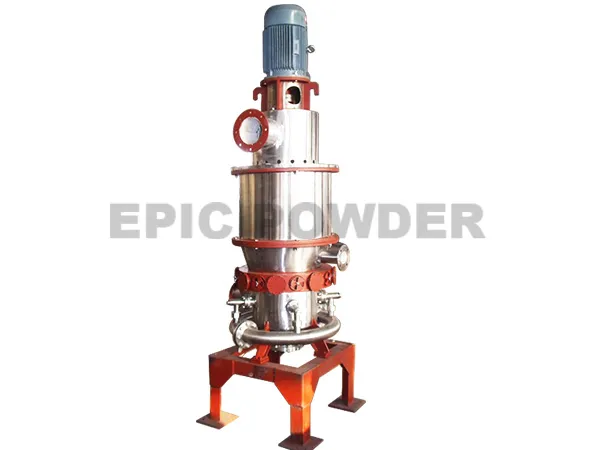
Moulin à jet d'air MQL
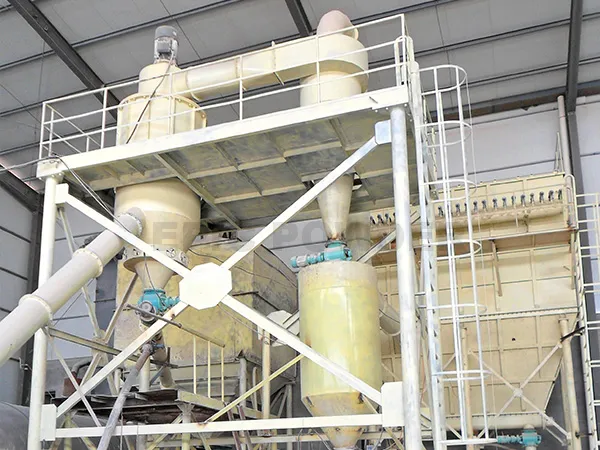
Le broyeur à jet d'air MQL Ce broyeur transforme du quartz de haute pureté en micropoudre de silice ultrafine grâce à des collisions d'air comprimé à haute vitesse, produisant des particules de tailles micrométriques et submicrométriques, une distribution granulométrique étroite, une contamination quasi nulle et sans dommage thermique. Sa roue de classification intégrée assure un contrôle précis de la taille maximale des particules, tandis que ses revêtements résistants à l'usure minimisent l'incorporation de fer et d'impuretés. La série MQW est idéale pour la production de poudre de silice ultrafine destinée à l'électronique, aux revêtements, aux plastiques et aux matériaux optiques.
Classificateur d'air HTS
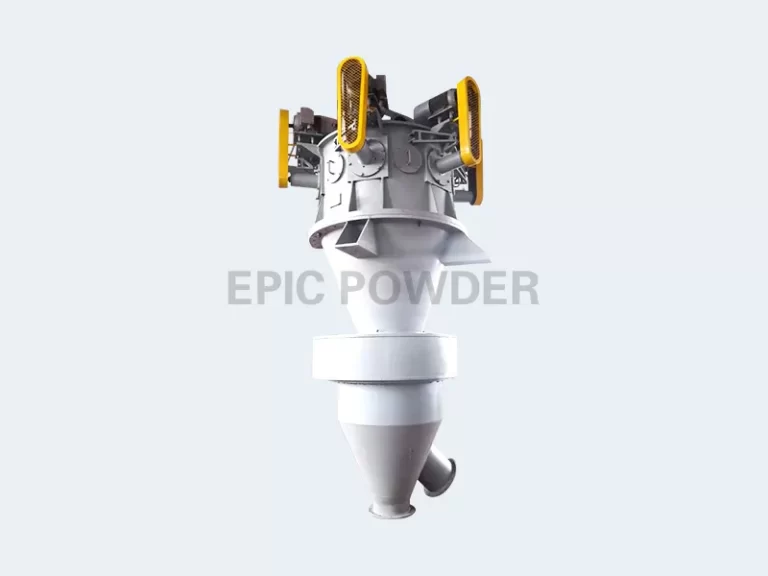
Le classificateur d'air HTS Ce système sépare les poudres par force centrifuge combinée à un flux d'air contrôlé, produisant ainsi des poudres de quartz et des fractions de silice à granulométrie serrée, tout en éliminant efficacement les particules surdimensionnées et les impuretés ferreuses. Grâce à ses points de coupe réglables, son débit élevé et son fonctionnement en circuit fermé sans poussière, la série HTS est largement utilisée pour le calibrage du sable et de la poudre de quartz destinés à la fabrication de pierres de quartz reconstituées, de réfractaires et à d'autres applications de haute pureté.
Poudre épique
Epic Powder, forte de plus de 20 ans d'expérience dans l'industrie des poudres ultrafines, contribue activement à l'avenir de ce secteur, en se concentrant sur les procédés de concassage, de broyage, de classification et de modification des poudres ultrafines. Contactez-nous pour une consultation gratuite et des solutions personnalisées !

Merci de votre lecture. J'espère que cet article vous sera utile. N'hésitez pas à laisser un commentaire ci-dessous. Vous pouvez également contacter le service client en ligne d'EPIC Powder. Zelda pour toute autre question.
— Jason Wang, Ingénieur