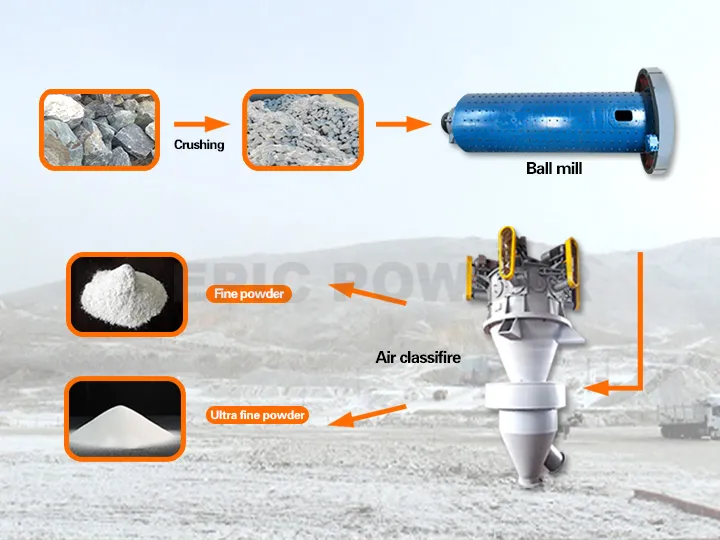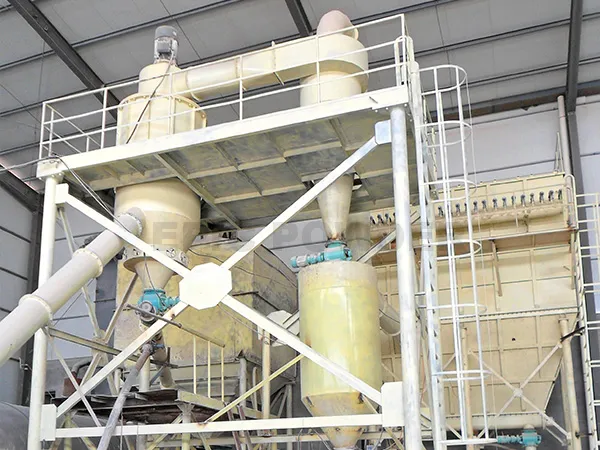
The right quartz ball mill grinding media fixes three numbers before your mill ever runs: iron contamination in the product, wear cost per ton, and the finest D97 you can reach. Quartz makes all three expensive when the choice is wrong. At Mohs 7 it is hard enough to wear down steel, cheap alumina, and poorly made ceramic alike, and every gram of worn media ends up in the powder you sell.
This article compares the four media types used in quartz ball mills, quantifies the wear and contamination trade-off, and gives a selection table by product spec.

Why quartz punishes the wrong media
Quartz is abrasive and chemically inert, so it does not dissolve your media. It grinds it away. Media wear is a direct input to product purity: 1 gram of worn media per ton of product equals 1 ppm of contamination. That arithmetic turns an abstract material choice into a specification problem.
Slurries and dry grinding both show the same pattern. Wear rises with media density, rotation speed, and hours on the clock, and it accelerates once media become round and lose their cutting edges. A mill that produces good whiteness in month one can fail the same spec in month six without a single process change.
The four candidates
| Media | Плотность | Hardness | Wear in quartz service | Contamination added | Typical use |
|---|---|---|---|---|---|
| Steel (forged or cast) | 7.6–7.8 g/cm³ | Mohs 5–6 | High, and rises fast as media round off | Iron, the worst case for whiteness and electronic grades | Never for quartz powder sold on purity |
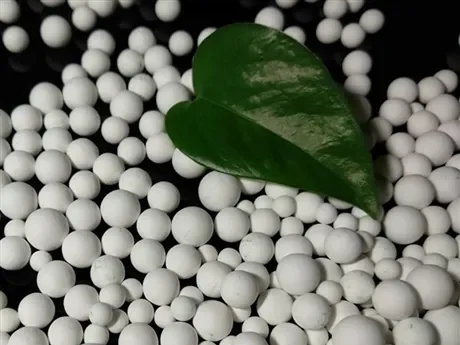
| Alumina (92–95% Al₂O₃) | 3.6–3.9 g/cm³ | Mohs 9 | Moderate; the workhorse of mineral grinding | Aluminium, plus sintering aids | Glass sand, construction fillers, engineered stone |
| Zirconia (yttria-stabilised) | 5.9–6.1 g/cm³ | Mohs 8.5 | Low; highest density of the ceramic family | Zirconium and yttrium | Fine grinding where both energy and purity matter |
| Porcelain / low-alumina ceramic | 2.3–2.6 g/cm³ | Mohs 6.5–7 | Low, but weak impact energy | Минимальный | Small media in stirred mills, whiteness-critical batches |
Density sets grinding energy. Hardness sets wear. Both decide what lands in your product. Alumina gives the best cost per ton of media but adds aluminium and sintering aids to the powder. Zirconia grinds faster and cleaner per hour but costs several times more per kilogram. Porcelain contaminates least and grinds slowest.
Wear rate and contamination: the relationship that decides your spec
Run the arithmetic before you buy. A mill producing 5 tons per hour and losing 20 grams of media per ton adds 20 ppm of media material to the product, every hour, for as long as it runs. Steel media in that role puts roughly 20 ppm iron into quartz powder. For high-purity and electronic-grade quartz, that number alone disqualifies the choice.
Translate media wear into the element that matters to your customer. Alumina at 15 g/t adds about 15 ppm aluminium. Zirconia at 3 g/t adds about 3 ppm zirconium plus a fraction of yttrium. Porcelain at 2 g/t adds almost nothing measurable. If your specification caps iron at 10 ppm, the media and the mill lining both have to be non-ferrous, and the liner matters as much as the beads.
Two practical consequences follow. First, wear rate is not constant: it climbs as media age, so design for the end of the media life, not the first week. Second, media size affects wear more than most buyers expect: small media expose more surface per unit mass and wear faster, while large media deliver impact that cracks quartz efficiently but break down quicker in a hard, abrasive slurry.
Liner choice belongs in the same decision
A ceramic-lined mill with steel media defeats the purpose. Pair the lining with the media: alumina tiles with alumina or zirconia beads, polyurethane or ceramic lining with porcelain beads, and no steel anywhere in the contact path for whiteness-critical products. Iron pickup from a worn steel liner can exceed iron pickup from the media itself.
Media size and fill ratio: the second decision
Media size follows feed size and target fineness. Coarse feed around 5 to 10 mm needs media in the 30 to 50 mm range to break particles at all. For fine grinding below 20 µm, 10 to 20 mm media work better because impact energy per collision matters less than the number of contacts.
Ball load typically sits between 30 and 45 percent of mill volume for quartz. Above that, media collide with each other more than with the product and energy per ton climbs. Below it, throughput falls and residence time becomes hard to control.
Target fineness drives energy far more than media type does. Halving D97 from 40 µm to 20 µm typically multiplies specific grinding energy several times over, whichever media you choose. That is where a ball mill reaches its limit and a classifier or jet mill takes over.
Selection table by product
| Product / spec | Recommended media | Lining | Why |
|---|---|---|---|
| Glass sand, construction filler, D97 above 45 µm | Alumina 92% | Alumina tiles or rubber | Lowest media cost per ton; purity is not the constraint |
| Engineered quartz stone, whiteness-sensitive, D97 20–45 µm | Alumina or zirconia | Alumina or polyurethane | Whiteness tolerates small aluminium pickup but not iron |
| High-purity quartz, iron cap below 10 ppm | Zirconia | Ceramic, fully non-ferrous circuit | Low wear per ton keeps total contamination inside spec |
| Electronic grade, D97 below 10 µm | Zirconia in stirred mill, or switch to jet milling | Ceramic or polyurethane | Ball milling energy becomes uncompetitive at this fineness |
| Semiconductor and photovoltaic grade, zero metal contact | No media: jet mill | Not applicable | Particle on particle grinding removes media wear as a contamination source |
Epic Powder equipment for quartz
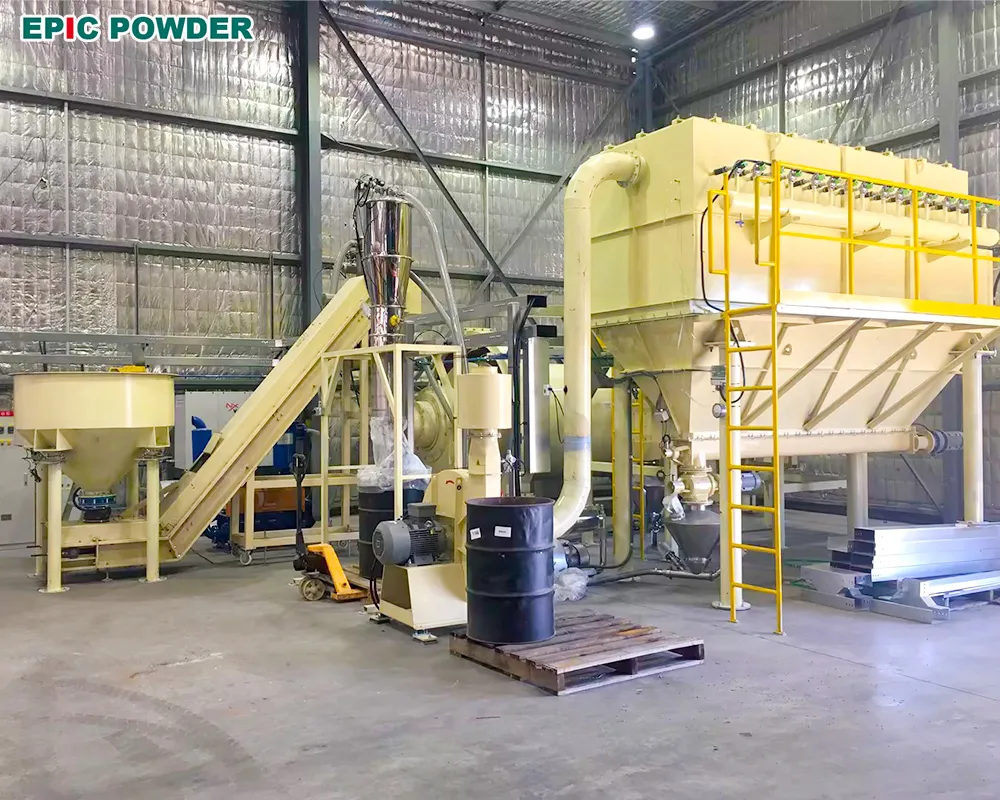
Epic Powder builds the Производственная линия шаровых мельниц и воздушных классификаторов with ceramic lining options, sized for quartz feed from crushed rock to fine powder, and pairs it with CTC and HTS classifiers to hold top size. For electronic and photovoltaic grades, the MQW vertical fluidized bed jet mill grinds by particle collision with no media and no metal contact in the grinding zone, and runs on nitrogen when oxidation or contamination control demands it.
Media and lining recommendations come from the trial report, not from a catalogue page. We test your ore, measure wear per ton, and hand you the media specification that meets your purity cap at your target D97.
What a trial grind should measure
Ask for four numbers before you commit to media and lining:
- Wear rate in grams per ton, measured over enough hours to see the steady state, not just the first batch
- Iron and media-element pickup in ppm, tested on the milled product, with the test method named
- D97 and D50 at your target, with the classifier setting and throughput that produced them
- Specific energy in kWh per ton, because media and energy cost together decide the real cost per ton
Send a sample, get a media specification
Media choice is settled fastest on your own ore. Send us a sample for a trial grind and we return the D50/D97 distribution, wear rate, iron pickup, and specific energy, with a recommended media and lining combination for your purity cap and target fineness. If your spec points to jet milling instead of ball milling, the report will say so.
Эпический порошок
Epic Powder designs grinding and classifying systems for minerals, chemicals, food, and pharmaceuticals. With more than 20 years of powder processing experience, we match the right mill to your target particle size and capacity. Tell us about your material and we will recommend a tested solution.

Спасибо за прочтение. Надеюсь, моя статья вам поможет. Пожалуйста, оставьте комментарий ниже. Вы также можете связаться с онлайн-представителем EPIC Powder. Molly для любых дальнейших запросов».
— Эмили Чен, engineer