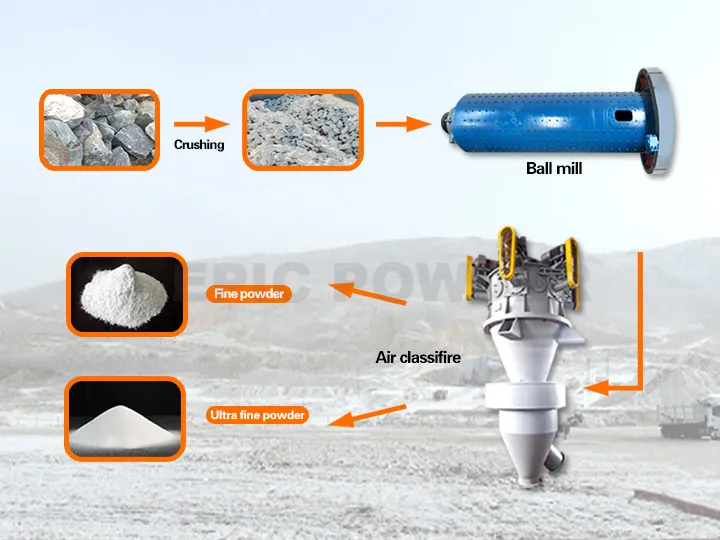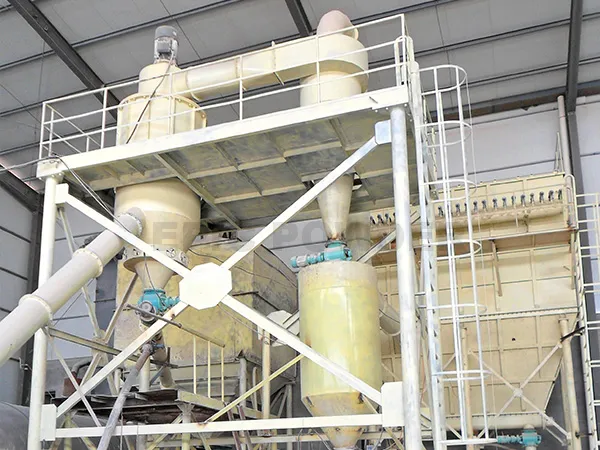
عند السعي لتحسين كفاءة طحن الكوارتز في مطاحن الكرات، من الضروري فهم العوامل الرئيسية التي تؤثر على الأداء. ويمكن تصنيف هذه العوامل إلى ثلاثة مجالات رئيسية: خصائص المواد, تصميم المطحنة، و المعايير التشغيلية.
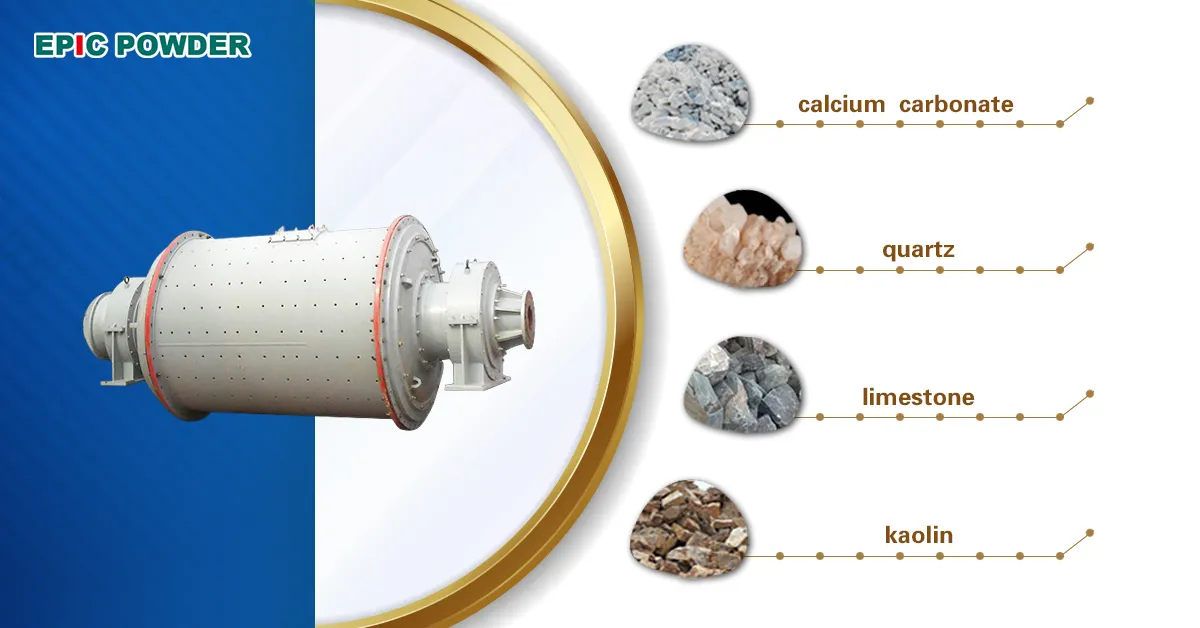
خصائص المواد التي تؤثر على الكفاءة
الكوارتز معدن صلب (صلابته حوالي 7 على مقياس موس)، مما يتطلب طاقة طحن أكبر. يساعد فهم صلابته في اختيار وسائط الطحن المناسبة وسرعة المطحنة. يؤثر حجم جزيئات الكوارتز الداخلة إلى المطحنة بشكل مباشر على ذلك. فكلما زاد حجم الجزيئات، زادت الطاقة اللازمة لتفتيتها، لذا يُعدّ تحسين حجمها أمرًا بالغ الأهمية لتقليل الحمل وتحسين الكفاءة. قد تتسبب الرطوبة الزائدة في تكتل الجزيئات أو التصاقها، مما يقلل من أداء الطحن. أما استخدام مواد جافة أو ذات رطوبة مضبوطة فيتيح طحنًا أكثر سلاسة وجودة منتج أفضل.
عناصر تصميم المطاحن ذات الأهمية
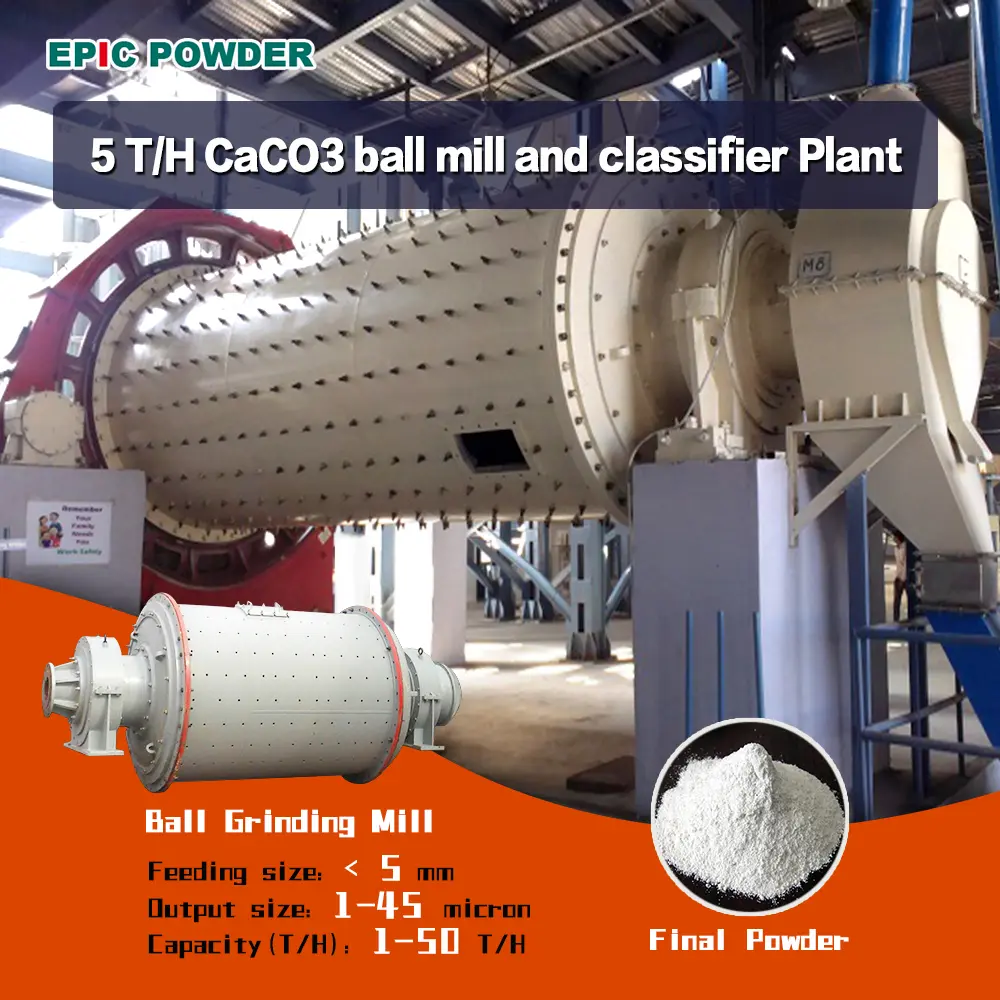
تؤثر نسبة الطول إلى القطر (L/D) على قدرة الطحن وحركة وسائط الطحن داخل المطحنة. وتضمن النسبة المثلى وقت طحن كافيًا وتأثيرًا مناسبًا لوسائط الطحن على الكوارتز. ويتطلب الكوارتز الكاشط بطانات مقاومة للتآكل، مثل المطاط أو الألومينا العالية أو المواد القائمة على السيليكا. كما تؤثر البطانات على كفاءة الطحن من خلال التأثير على سلوك تدفق وسائط الطحن. وتمنع أنظمة التفريغ الفعالة الطحن الزائد والانسداد، مما يحافظ على إنتاجية ثابتة وحجم منتج متجانس.
المعايير التشغيلية التي يجب تحسينها
يُحقق التشغيل بسرعة حرجة تتراوح بين 70 و80% تدرجًا مثاليًا لوسائط الطحن، مما يزيد من طاقة الصدم دون الحاجة إلى الطرد المركزي. ويُعد مستوى تعبئة شحنة الكرات بين 35 و45% نموذجيًا لطحن الكوارتز، حيث يُوازن بين استهلاك الطاقة وتكرار تصادم الوسائط. ويؤثر تركيز الملاط أو المسحوق على عملية الطحن. ويساعد التركيز المناسب على منع تكتل الجزيئات وتحسين كفاءة الوسائط. ومن خلال التركيز على هذه العوامل تحسين مطحنة الكرات الكوارتزية من خلال عوامل مثل خصائص المواد، وتصميم المطحنة، والتشغيل، يمكنك تحسين كفاءة الطحن بشكل كبير لإنتاج مسحوق الكوارتز ومعالجة رمل السيليكا.
تحسين تحضير العلف
يُعدّ تحسين تحضير المواد الخام أمرًا بالغ الأهمية لرفع كفاءة طحن الكوارتز في مطاحن الكرات. ويتمثل المبدأ الأساسي هنا في "زيادة التكسير وتقليل الطحن". فعند تكسير الكوارتز إلى حجم مثالي - عادةً أقل من 10-20 مم - يتم تقليل عبء العمل على المطحنة وتوفير الطاقة. أما أحجام المواد الخام الأكبر فتتطلب من مطحنة الكرات بذل جهد أكبر لتكسير الجزيئات، مما يؤدي إلى هدر الطاقة وانخفاض الإنتاجية.
تُعدّ تقنيات التكسير المسبق، مثل الكسارات الفكية أو المطاحن المطرقة، فعّالة في تقليل حجم المواد الخام قبل الطحن. تضمن هذه الآلات تغذية متجانسة، وتمنع دخول القطع الكبيرة إلى مطحنة الكرات. لا تتسبب المواد الخام كبيرة الحجم في هدر الطاقة فحسب، بل قد تؤدي أيضًا إلى توزيع غير متجانس لحجم الجسيمات ومسحوق كوارتز خشن.
يساعد الحفاظ على حجم التغذية المناسب على كفاءة عمل وسائط الطحن، كما يُحسّن من كفاءة طحن رمل السيليكا بشكل عام. لمزيد من النصائح حول تحسين حجم التغذية ومعدات التكسير المسبق، اطلع على هذه النظرة العامة المفصلة حول خطوط إنتاج تصنيف مطاحن الكرات الكوارتزية.
اختيار وسائط الطحن المناسبة
يُعدّ اختيار وسائط الطحن المناسبة عاملاً أساسياً لتحسين كفاءة طحن الكوارتز في مطاحن الكرات. بالنسبة للكوارتز، يُفضّل استخدام الكرات الخزفية أو كرات الألومينا على الكرات الفولاذية لتجنب تلوث مسحوق الكوارتز بالحديد، الذي قد يؤثر على نقائه. كما أن صلابة الكوارتز وقدرته على الكشط تجعل اختيار وسائط الطحن أمراً بالغ الأهمية للحفاظ على جودة المنتج.
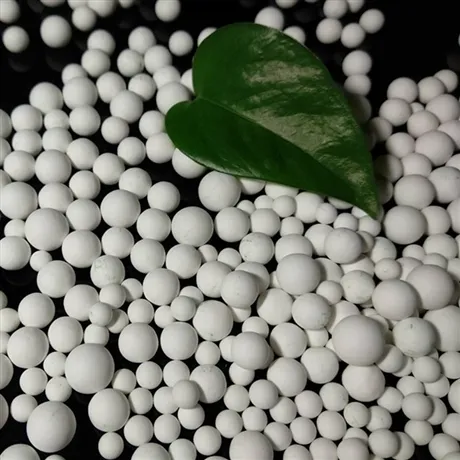
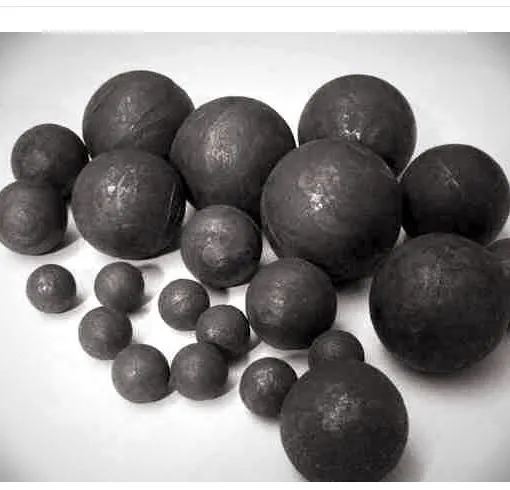
فيما يتعلق بحجم الكرات، يعتمد الاختيار الأمثل على حجم جزيئات التغذية. عمومًا، يساعد مزيج متجانس من أحجام الكرات على زيادة كفاءة الصدم والتآكل. تعمل الكرات الأكبر حجمًا على تكسير جزيئات التغذية الأكبر، بينما تطحن الكرات الأصغر حجمًا الجزيئات الأدق، مما يخلق بيئة طحن متوازنة.
يُعد الحفاظ على نسبة شحن الكرات ومستوى التعبئة المناسبين بنفس القدر من الأهمية. في طحن الكوارتز، تتراوح نسبة التعبئة النموذجية بين 35 و45%، مما يضمن وجود كمية كافية من الكرات لطحن فعال دون تحميل المطحنة فوق طاقتها. كما تؤثر كثافة الكرات وشكلها على عملية الطحن. توفر الكرات الكروية قوى تصادم ثابتة، بينما قد تزيد الكرات ذات الأشكال غير المنتظمة من التآكل.
يساعد تحقيق التوازن بين هذه العوامل - نوع الوسائط، وتدرج الحجم، ونسبة التعبئة، والشكل - على تحسين أداء الطحن، وتقليل استهلاك الطاقة، وإنتاج مسحوق الكوارتز الناعم بكفاءة. للحصول على معلومات تفصيلية حول اختيار الوسائط وتحسين عملية الطحن، يمكنك الاطلاع على الأدلة المتخصصة على اختيار وسائط الطحن في مطحنة الكرات.
تحسين سرعة دوران المطحنة
يُعدّ ضبط سرعة الطاحونة أمرًا بالغ الأهمية لتحسين كفاءة طحن الكوارتز في طواحين الكرات. ويكمن السرّ في التشغيل ضمن نطاق سرعة يتراوح بين 70 و80 درجة مئوية من السرعة الحرجة، وهي السرعة التي تبدأ عندها وسائط الطحن بالالتصاق بجدران الطاحونة بفعل قوة الطرد المركزي. ويضمن البقاء ضمن هذا النطاق حركة الطحن المتتالية الصحيحة التي تسمح للكرات الفولاذية أو الخزفية بالسقوط بسلاسة، مما يزيد من نقل الطاقة إلى جزيئات الكوارتز.
عند السرعات الأقل من هذا النطاق، لا تؤثر وسائط الطحن على الكوارتز بفعالية، مما يقلل من كفاءة الطحن. في المقابل، تزيد السرعات الأعلى من 80% عن خطر الطرد المركزي، حيث تلتصق الوسائط بجدران المطحنة، مما يقلل من تأثيرها ويؤدي إلى طحن غير فعال. بالنسبة للمواد الصلبة مثل الكوارتز، يضمن ضبط سرعة المطحنة أن قوة الصدم تكسر الجزيئات بكفاءة دون إهدار الطاقة.
يعتمد حساب السرعة الحرجة الدقيقة على أبعاد المطحنة، ولكن الحفاظ على معدل الدوران بين 70 و80 دورة في الدقيقة يساعد في الحفاظ على حركة الطحن المثلى. هذا التوازن يحسن كفاءة طحن رمل السيليكا ويقلل من تآكل كل من وسائط الطحن والبطانات، مما يعزز في النهاية إنتاج مسحوق الكوارتز.
للحصول على مزيد من المعلومات حول تأثير سرعة المطحنة ووسائط الطحن على كفاءة طحن الكوارتز، اطلع على دليلنا الشامل حول تحسين مطحنة الكرات الكوارتزية.
التحكم في تركيز الطحن والمواد المضافة
يُعدّ ضبط تركيز الطحن عاملاً أساسياً لتحسين كفاءة طحن الكوارتز في مطاحن الكرات. بالنسبة للكوارتز، يؤثر اختيار الطحن الرطب أو الجاف على كلٍّ من عملية الطحن وجودة المنتج النهائي. يوفر الطحن الرطب عادةً كفاءة طحن أفضل وتحكماً أدق في حجم الجسيمات، لأن المادة اللزجة تساعد على تقليل الحرارة ومنع الغبار. مع ذلك، يتطلب هذا النوع من الطحن معدات خاصة لمعالجة المادة اللزجة وإدارة النفايات. أما الطحن الجاف فيتجنب المشاكل المتعلقة بالمادة اللزجة، ولكنه قد يُولّد المزيد من الحرارة والغبار، مما قد يؤدي إلى التكتل وانخفاض الكفاءة.
يُعدّ ضبط تركيز الملاط أمرًا بالغ الأهمية أثناء الطحن الرطب. يتراوح تركيز ملاط الكوارتز النموذجي بين 65% و75% من المواد الصلبة وزنيًا. يؤدي الملاط السميك جدًا إلى ضعف حركة وسائط الطحن وانخفاض كفاءة الطحن، بينما يؤدي الملاط الرقيق جدًا إلى فقدان الطاقة في الماء المتداول. يُحقق التوازن الأمثل أقصى قدر من الصدم والتآكل، مما يُحسّن معدل الطحن.
يمكن استخدام مواد مساعدة للطحن وإضافات كيميائية لتعزيز الأداء. تعمل هذه المواد على تحسين تدفق المواد، وتقليل تكتل الجزيئات، ومنع تراكمها على وسائط الطحن والبطانات، مما يقلل من فقد الطاقة. تشمل الإضافات الشائعة للسيليكا مواد التشتيت ومواد تفتيت التكتل للحفاظ على جزيئات الكوارتز معلقة بدقة وسهلة التدفق.
من خلال التحكم الدقيق في تركيز الطحن واستخدام الإضافات المناسبة، يمكنك تعزيز كفاءة عمليات مطحنة الكوارتز الكروية وإنتاج مسحوق كوارتز أنعم باستهلاك أقل للطاقة. لمزيد من المعلومات حول معالجة الكوارتز بكفاءة، اطلع على دليلنا حول إنتاج مسحوق الكوارتز ومحلول طحنه.
تحسينات في تصميم البطانة والتصميم الداخلي
لتحسين كفاءة طحن الكوارتز في مطاحن الكرات، يُعد اختيار البطانات المناسبة وتحسين التصميم الداخلي أمرًا أساسيًا. نظرًا لأن الكوارتز مادة كاشطة للغاية، فإن استخدام بطانات مقاومة للتآكل مصنوعة من المطاط أو السيليكا أو مواد غنية بالألومينا يُساعد على إطالة عمر البطانة وتقليل وقت التوقف للصيانة. تقاوم هذه المواد التآكل الشديد الناتج عن طحن الكوارتز، مما يحمي أسطوانة المطحنة.
يُمكن استخدام بطانات مُخددة أو مُتموجة لزيادة مساحة التلامس بين وسائط الطحن وجزيئات الكوارتز. تُحسّن هذه الزيادة في التلامس من قوة الطحن، مما يجعل عملية الطحن أكثر كفاءة. كما تُساعد نهايات التفريغ المصممة بعناية على ضمان تدفق أكثر سلاسة للمواد، مما يمنع الاختناقات ويُقلل من الطحن الزائد لجزيئات الكوارتز الدقيقة.
للمزيد حول تحسين تصميم المطاحن الداخلية وزيادة كفاءة معالجة الكوارتز، اطلع على حلول مثل التصاميم المُحسّنة الموجودة في خطوط إنتاج مطاحن الكرات وآلات التصنيف الهوائي مصمم خصيصاً للمواد الكاشطة.
التصنيف وأنظمة الدوائر المغلقة
استخدام التصنيف وأنظمة الدوائر المغلقة يُعدّ تحسين كفاءة طحن الكوارتز في مطاحن الكرات أمرًا أساسيًا. كما يسمح دمج المصنفات الهوائية بما يلي: التحكم الدقيق في حجم الجسيماتيضمن هذا الأسلوب مرور أنعم مسحوق الكوارتز فقط، بينما تُعاد الجزيئات الخشنة إلى المطحنة لمزيد من الطحن. ويقلل من الطحن الزائد ويُحسّن استخدام الطاقة.
فوائد الطحن في الدائرة المغلقة:
- إعادة تدوير الجزيئات الخشنة لتحسين إنتاجية المطحنة بشكل عام
- ينتج مسحوق الكوارتز ذو حجم موحد، عادةً ما يكون D97 بين 10-45 ميكرومتر
- يقلل من استهلاك الطاقة من خلال استهداف الجزيئات كبيرة الحجم فقط لإعادة الطحن
- يعزز جودة المنتج وتناسقه، وهو أمر بالغ الأهمية لتطبيقات مسحوق الكوارتز
تُعدّ المصنفات الهوائية المصممة لمعالجة الكوارتز، مثل مصنفات تدفق الهواء الرأسي عالية الدقة، فعّالة للغاية في هذا الإعداد. وللحصول على نظام فعّال مُصمّم خصيصًا للكوارتز، ضع في اعتبارك خيارات مثل: جهاز تصنيف الطرد المركزي Epic Powder لتصنيف دقيق لمسحوق الكوارتز أو استكشف نماذج مصنفات الهواء العمودية لتتوافق مع توزيع حجم الجسيمات المطلوب.
| ميزة | فائدة | النطاق النموذجي |
|---|---|---|
| حجم الجسيمات (D97) | منتج ناعم موحد | 10-45 ميكرومتر |
| الطحن في دائرة مغلقة | توفير الطاقة، وتقليل النفايات | إعادة تدوير مستمرة للمواد الخشنة |
| مصنف الهواء | فرز الجسيمات بدقة | مقاس قابل للتعديل |
من خلال الجمع بين هذه العناصر، يتجاوز تحسين مطحنة الكرات الكوارتزية مجرد الطحن - فهو يحقق عملية إنتاج مسحوق مبسطة وموفرة للطاقة ومتسقة.
أفضل الممارسات في مجال الصيانة والمراقبة
للحفاظ على كفاءة مطحنة الكرات الكوارتزية، تُعد الصيانة والمراقبة المنتظمة أمراً أساسياً. أولاً، تأكد من تجديد الكرات بانتظام ومراقبة التآكلبمرور الوقت، تتآكل وسائط الطحن، مما يقلل من كفاءتها ويزيد من استهلاك الطاقة. يساعد تتبع تآكل الكرات في الحفاظ على الأداء الأمثل. نسبة شحنة الكرة ويمنع الطحن غير المتساوي.
التحكم في درجة الحرارة يُعدّ عاملاً حاسماً آخر. فصلابة الكوارتز وطبيعته الكاشطة قد تتسببان في تراكم الحرارة، مما قد يُلحق الضرر ببطانات المطاحن ويؤثر على جودة المسحوق. ويمنع الحفاظ على استقرار درجة حرارة المطحنة حدوث المشاكل المتعلقة بالحرارة ويحافظ على خصائص الكوارتز أثناء الطحن.
سلوك عمليات تدقيق الطاقة وتتبع الأداء بانتظام. تساعد مراقبة استهلاك الطاقة جنبًا إلى جنب مع الإنتاج على تحديد أوجه القصور مبكرًا. وبهذه الطريقة، يمكنك توفير تكاليف التشغيل مع الحفاظ على جودة عالية. طحن مسحوق الكوارتز الناعم.
إن تطبيق ممارسات الصيانة هذه يضمن أداءً متسقًا، وتوفيرًا في الطاقة، وعمرًا أطول للمعدات، وكلها أمور حيوية لتشغيل مطحنة كرات الكوارتز بكفاءة.
حلول متطورة من إبيك باودر
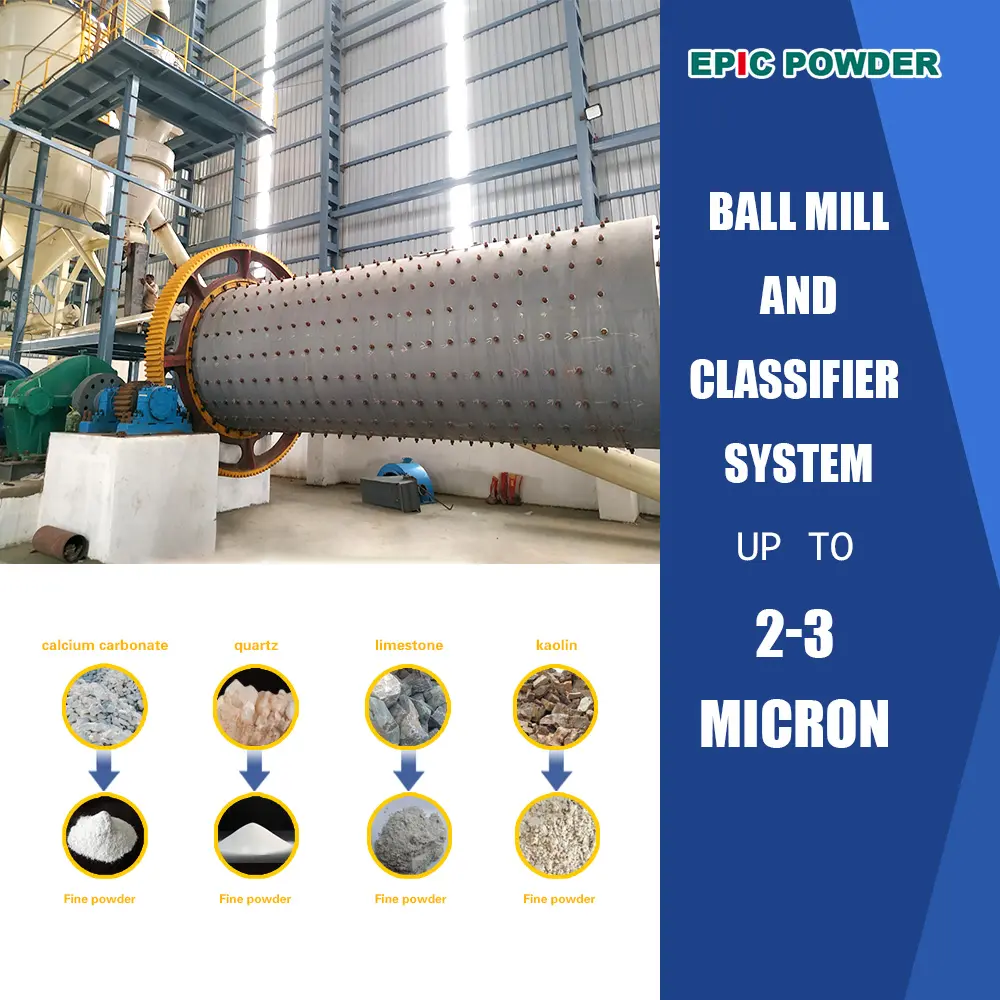
تقدم شركة Epic Powder مطاحن كرات الكوارتز المصممة لـ أقصى كفاءة طحنتتميز مطاحنهم بنسبة طول إلى قطر مثالية تضمن توزيعًا متوازنًا للطاقة، مما يحسن نعومة مسحوق الكوارتز وإنتاجيته. مكونات مقاومة للتآكل مثل البطانات عالية الألومينا ووسائط الطحن المصنوعة من الألومينا، يمتد عمر المعدات بشكل كبير في ظروف طحن الكوارتز القاسية.
الميزات الرئيسية لمطاحن الكرات الكوارتزية من إبيك باودر:
| ميزة | فائدة |
|---|---|
| نسبة الطول إلى القطر المُحسّنة | كفاءة وقدرة طحن محسّنة |
| بطانات مقاومة للتآكل | عمر أطول مع صيانة أقل |
| تصنيف عالي الدقة | حجم جسيمات موحد، مما يقلل من الطحن الزائد |
| وسائط طحن قابلة للتخصيص | يمنع التلوث، ويحسن نقاء المنتج |
يدمج Epic Powder أيضًا مصنفات الهواء عالية الدقة بفضل مطاحن الكرات، تُمكّن أنظمة الطحن ذات الدائرة المغلقة من الحفاظ على تحكم دقيق في حجم الجسيمات (مثلًا، D97 < 45 ميكرومتر). يؤدي هذا الإعداد إلى إنتاج مسحوق الكوارتز بشكل متسق مع استهلاك أقل للطاقة وتقليل عمليات إعادة الطحن.
مكاسب مثبتة في الكفاءة
سجلت العديد من المشاريع التي تستخدم حلول Epic Powder ما يلي:
- 15-20% انخفاض في استهلاك الطاقة
- زيادة معدل الإنتاج 10-15%
- تحسين نقاء مسحوق الكوارتز عن طريق تقليل التلوث بالحديد
تتكامل أنظمتهم بسلاسة مع خطوط الإنتاج الكاملة، مما يضمن معالجة سلسة للكوارتز بدءًا من سحق المواد الخام وحتى تصنيف المسحوق الناعم. يمكنك معرفة المزيد عن أنظمتهم المتقدمة. خط إنتاج مطحنة الكرات وجهاز التصنيف الهوائي مصمم خصيصاً لمسحوق الكوارتز عالي النقاء.
لتحقيق تحسين موثوق وجاهز للتوسع في استخدام مطاحن الكرات الكوارتزية، تبرز حلول شركة Epic Powder، حيث توازن بين توفير الطاقة وجودة المنتج الفائقة.
مسحوق ملحمي
مسحوق ملحمي نحن متخصصون في تكنولوجيا معالجة المساحيق الدقيقة للصناعات المعدنية والكيميائية والغذائية والصيدلانية وغيرها. يتمتع فريقنا بخبرة تزيد عن 20 عامًا في معالجة مختلف أنواع المساحيق، وقد قمنا بتصميم وتركيب أكبر خط إنتاج مطاحن نفاثة لإنتاج مسحوق الباريت فائق النعومة في الصين.
نحن موردون محترفون للغاية لمشاريع معالجة المساحيق، وخاصة طحنها وتصنيفها وتشتيتها ومعالجة أسطحها وإعادة تدوير النفايات. نقدم خدمات الاستشارات والاختبار وتصميم المشاريع والآلات والتشغيل والتدريب.

شكرًا لقراءتكم. آمل أن يكون مقالي مفيدًا. يُرجى ترك تعليق أدناه. يمكنكم أيضًا التواصل مع ممثل خدمة عملاء EPIC Powder عبر الإنترنت. زيلدا "لأي استفسارات أخرى."
— جيسون وانج, مهندس أول