As smart devices become increasingly ubiquitous, we often focus their core competitiveness on chip computing power and screen display quality, while overlooking the crucial contribution of quartz sensors. Whether in everyday smartphones or AI devices, quartz sensors, leveraging their unique physical properties, have transformed from auxiliary components into core perception carriers. Especially against the backdrop of the AI era, how are quartz sensors breaking through limitations and realizing infinite possibilities in the technological wave of smart devices?

Quartz Sensors
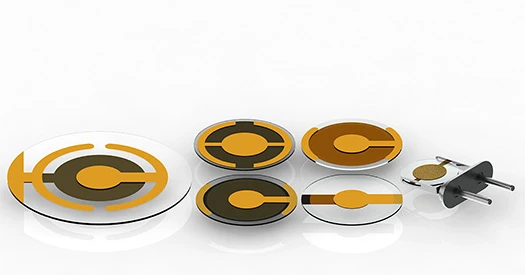
Quartz sensors are not a new invention. In the era of feature phones, the predecessors of today’s smartphones, they existed in the form of quartz oscillators, undertaking the basic functions of timing and signal synchronization. As smartphones evolved towards thinner profiles, higher performance, and diverse usage scenarios, the role of quartz sensors has also upgraded from a single-purpose tool to a multi-dimensional perception core, permeating every detail of the phone. It is understood that every modern smartphone contains at least 1-2 quartz sensor units, encompassing types like quartz resonant sensors and quartz piezoelectric sensors, each catering to different functional needs. Examples include navigation functions, haptic feedback for touch, vibration alerts, and within the RF module, the quartz crystal oscillator is a core component ensuring stable signal transmission – a vital guarantee for high-speed connectivity in 5G phones.
Market data indicates extremely high penetration of quartz sensors in the mobile phone sector. According to statistics, the localization rate of domestically produced quartz wafers for smartphone main clock crystals reached 41% in 2023, a significant leap from 12% in 2019. This signifies that the domestic substitution of quartz sensors is accelerating, becoming a crucial pillar for the security of the mobile phone supply chain. Of course, with the continuous advancement of mobile technology, new challenges arise for quartz sensors – the demand for smaller footprints, lower power consumption, and higher stability. These requirements act as the core driving force propelling the technological upgrade of quartz sensors.
Four Major Trends
As we step into the AI era, smart devices – whether AI wearables, AI robots, industrial AI systems, or autonomous vehicles – demand levels of perception accuracy, environmental adaptability, and data coordination capabilities that far exceed those required in the smartphone era. The reason quartz sensors stand out among numerous sensor types lies in their ability to leverage the inherent advantages of quartz crystals to achieve four key technological breakthroughs, precisely fitting the needs of AI scenarios.
1. Miniaturization and Integration
AI devices often prioritize being lightweight, thin, and compact. This is especially true for wearable AI gadgets like smart bands and micro health monitors, which impose extremely stringent volume requirements on sensors. In the past, manufacturing process limitations resulted in relatively large quartz sensors, making them unsuitable for micro-devices. However, with the accelerated integration of MEMS technology and quartz crystal techniques, chip-scale packaged (CSP) quartz devices are gradually becoming commercially available. The size of quartz sensors has been significantly reduced, enabling millimeter-scale packaging while integrating sensitive elements and signal conditioning circuits onto a single chip. This not only meets the installation requirements of micro AI devices but also helps lower the overall power consumption of the equipment. It is projected that by 2026, the penetration rate of such micro quartz sensors in wearable devices could reach 65%.
2. Upgraded Precision and Stability
The core competitiveness of AI devices lies in accurate decision-making, which in turn relies on precise perception. Quartz crystals possess an extremely low coefficient of thermal expansion and a high-quality factor. According to relevant data, their measurement accuracy typically reaches 0.01% – 0.05% Full Scale (FS), with resolution as low as 0.001% FS and annual drift controlled within 0.02%, far exceeding the conventional accuracy of MEMS sensors. Furthermore, they can provide stable and accurate perceptual data for AI devices even in extreme environments like high heat or severe cold, preventing AI algorithms from making erroneous decisions due to data deviations.
3. Intelligence and Deep Integration with AI
Traditional quartz sensors were limited to data collection. However, quartz sensors in the AI era are evolving to enable intelligent analysis. By embedding simple AI algorithm modules, these sensors can perform real-time preprocessing of collected data such as vibration, pressure, and frequency. They filter out truly effective information before transmitting it to the main AI core chip, significantly reducing the chip’s computational burden and enh,ancing the device’s response speed.
4. Cost Reduction and Scenario Diversification
Historically, the complex manufacturing process of quartz sensors resulted in high costs, limiting their application primarily to high-end devices. However, with breakthroughs in domestic technology and optimization of manufacturing processes, the cost of quartz sensors is gradually decreasing. This allows them to penetrate mid-to-low-end markets and adapt to a wider variety of AI application scenarios. Looking at the development of high-frequency quartz wafers, their market share is expected to account for 45% of the overall market in 2025, a 12-percentage-point increase from 2023. Their penetration is also significantly rising in areas like 5G base station filters and automotive-grade electronic systems, providing support for the proliferation of AIoT, autonomous driving, and other applications.
Where are Quartz Sensors Applied in AI Scenarios?
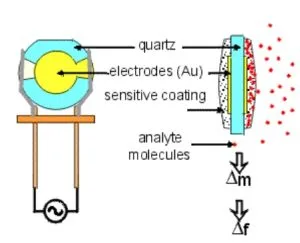
Quartz sensors are transitioning from supporting roles to core functionalities in the AI era, comprehensively reshaping the experience of smart devices across consumer electronics, industry, and medical fields.
In numerous AI scenarios, quartz sensors empower wearables to be more accurate and intelligent. For instance, AI-powered health wearables equipped with high-precision quartz sensors can meticulously monitor subtle changes in human heart rate, body temperature, and respiratory rate. They can even capture minute muscle vibrations, enabling disease prediction and precise sleep quality analysis when combined with AI algorithms. In AI-powered smart homes, quartz sensors accurately perceive environmental changes like temperature, humidity, and vibrations.
In industrial production, applications like AI-driven quality inspection and equipment fault prediction rely heavily on precise sensing data. Thanks to their robust environmental adaptability, quartz sensors operate reliably in demanding industrial environments involving high temperatures, high pressure, and strong vibrations. They accurately capture equipment vibration frequencies and pressure changes, allowing AI algorithms to analyze operational status in real-time, predict potential failure risks in advance, and minimize production downtime.
Autonomous driving

In the field of autonomous driving, quartz sensors precisely detect vehicle speed, attitude, and road vibrations. Working in tandem with AI autonomous driving algorithms, they facilitate accurate steering and braking control. Their high stability and anti-interference capabilities provide reliable perception support for autonomous vehicles navigating complex road conditions. In the realm of AI robotics, quartz sensors capture subtle vibrations and posture changes in robot joints. This enables more precise and flexible movements suitable for high-end applications like precision manufacturing and robotic surgery. In aerospace, quartz sensors maintain stable operation under extreme temperature and pressure conditions. It provides accurate attitude and pressure data to AI-based flight control systems, thereby supporting the precise operation of aerospace equipment.
From tiny phone oscillators to core AI sensors, quartz keeps evolving. Its physical advantages drive innovation. It breaks limits with each tech wave. They not only enhance the experience of existing smart devices but will also unlock a multitude of entirely new application possibilities.
How Fine Must Quartz Be Ground for Sensor Production?
When manufacturing quartz sensors, there is no single fixed number for grinding fineness. Instead, it follows a refined progressive standard throughout the production process. Based on process objectives, grinding transitions from coarse abrasives to ultra-fine polishing to achieve the required frequency, surface quality, and performance.
Fineness in this process is mainly reflected in two aspects. First, the particle size of the abrasive used for grinding. Secondly, the surface roughness of the wafer after final finishing.
Key Fineness Indicators in the Grinding Process
To help you understand this process more clearly, I have organized the key fineness indicators for different stages as follows:
| Process Stage | Key Fineness Indicators | Typical Applications & Explanations |
|---|---|---|
| Precision Grinding | Abrasive Particle Size: • Coarse Grinding: Approx. 20 μm • Medium Grinding: 7 – 14 μm • Fine/Finish Grinding: 3 – 7 μm | This is a step-by-step refinement process to remove damage from previous stages. For example, one study used 20μm abrasives to modify the quartz surface and study its effect on sensor sensitivity. Another process clearly defines steps of 1000#, 2500#, 3000#, and 4000# , with corresponding abrasive sizes ranging from over ten micrometers down to a few micrometers. |
| Ultra-Precision Polishing | Abrasive Particle Size: • Rough Polishing: Mixed with diamond slurry ≤0.3μm • Fine Polishing: Uses only 50nm SiO₂ polishing slurry | Grinding is followed by polishing to achieve a near-perfect surface. For instance, one study used a “two-step polishing method,” first rough polishing with a slurry containing 0.3μm diamond particles, and finally fine polishing with 50 nanometer (0.05μm) silica polishing slurry. |
| Final Surface Quality | Surface Roughness: • Sensor Sensitization: < 1 nm (RMS) • General Precision Grinding: < 0.7 μm (Rmax) | This is the core indicator for measuring the final result. One study achieved a quartz film with a surface roughness of only 0.89 nanometers. Another experiment measured an average surface roughness of about 179 nanometers after grinding with 7μm abrasive. In more general precision grinding, a surface roughness of 0.7μm can also be achieved. |
How Epic Powder Machinery Can Help
Producing quartz materials with these precise fineness requirements demands advanced powder processing equipment. Epic Powder Machinery specializes in manufacturing the solutions you need.
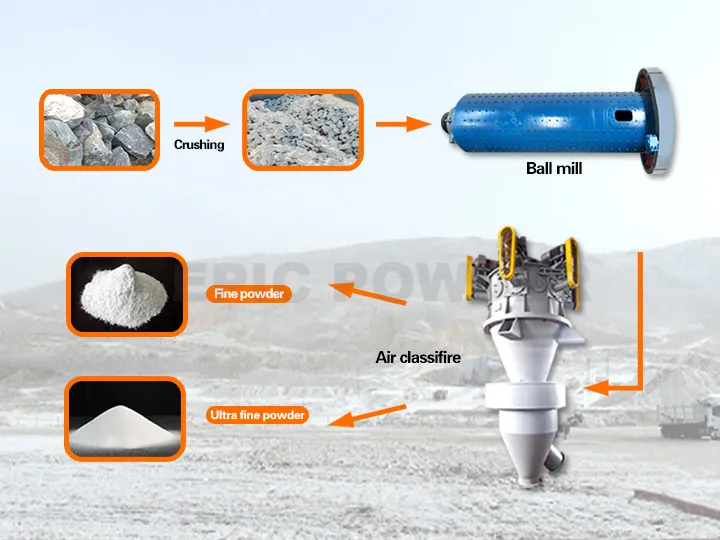
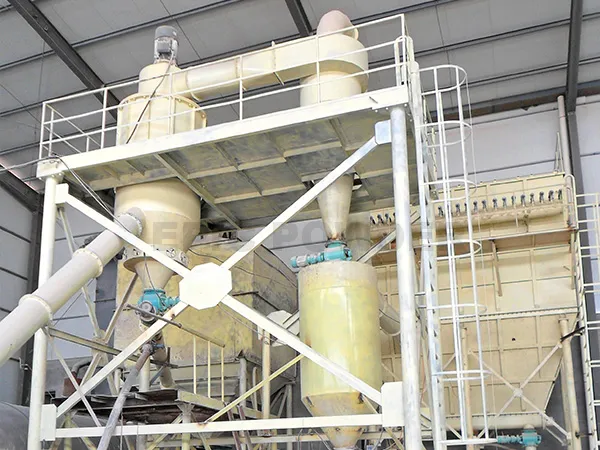
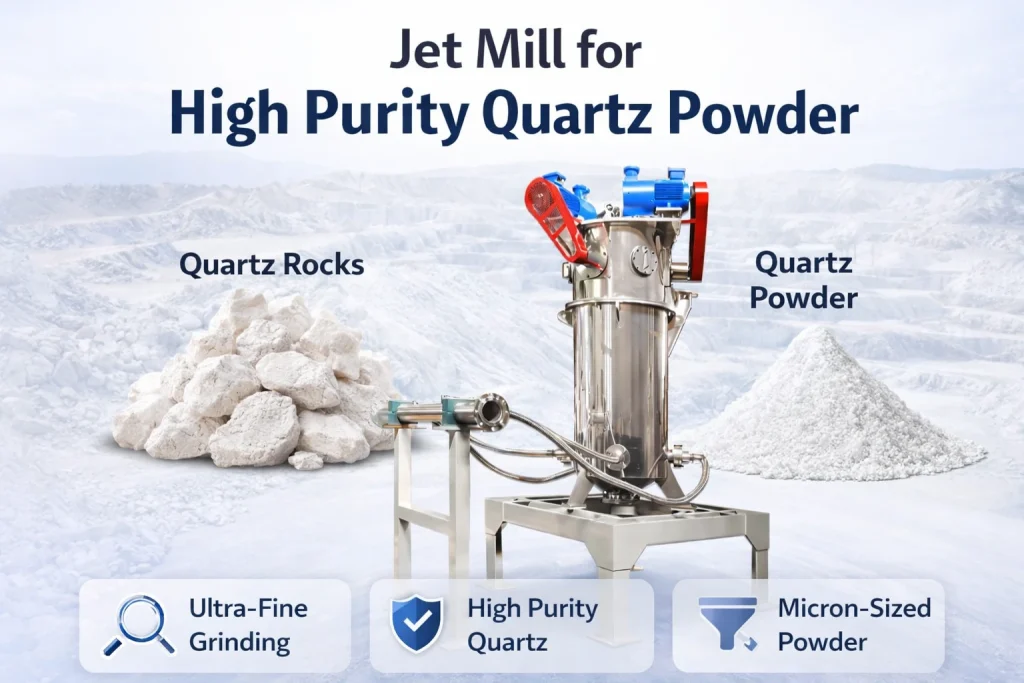
Our Jet Mills use fluid energy to grind materials to ultra-fine particles with precise size distributions. They’re ideal for producing the fine abrasives or directly grinding quartz to specification. Our Air Classifiers excel at separating particles with high precision, ensuring a tightly controlled particle size range and removing oversize material. It is critical for achieving consistent fineness in both abrasive powders and final quartz powder products.
Frequently Asked Questions
Q1: What is the lifespan of a typical quartz sensor in AI devices?
A1: Quartz sensors are known for exceptional durability. They typically last over 10-15 years. Their lifespan often exceeds the device itself. This longevity comes from quartz crystal’s stable physical properties. It resists aging, fatigue, and environmental stress.
Q2: How do quartz sensors compare to MEMS sensors for AI applications?
A2: Quartz sensors offer superior precision and stability. MEMS sensors are cheaper and smaller. Quartz has lower drift and better temperature tolerance. For high-end AI needs like自动驾驶, quartz is preferred. MEMS works well for basic motion sensing in consumer gear.
Q3: Are quartz sensors environmentally friendly to manufacture?
A3: Quartz is a natural, abundant material. Manufacturing has become cleaner over time. New processes reduce waste and energy use. Many producers now adopt green practices. Quartz sensors also enable energy-efficient AI devices. This helps reduce overall carbon footprint.
Epic Powder
Epic Powder, 20+ years of work experience in the ultrafine powder industry. Actively promote the future development of ultra-fine powder, focusing on crushing, grinding, classifying and modification process of ultra-fine powder. Contact us for a free consultation and customized solutions! Our expert team is dedicated to providing high-quality products and services to maximize the value of your powder processing. Epic Powder—Your Trusted Powder Processing Expert!

“Thanks for reading. I hope my article helps. Please leave a comment down below. You may also contact EPIC Powder online customer representative Zelda for any further inquiries.”
— Emily Chen, Volunteer