Quartz is one of the most widely processed industrial minerals, yet its hardness (Mohs 7) and abrasiveness make efficient processing a significant engineering challenge. From glass manufacturing to semiconductor chip packaging, the demand for high‑purity quartz powder continues to surge across industries. But how do you transform raw quartz ore into the ultra‑fine, contamination‑free powder that modern applications require? This guide covers the essential technologies and best practices for quartz ore crushing and grinding. It helps you understand the process, avoid common pitfalls, and achieve the particle size and purity your production demands.
Understanding the Processing Challenge
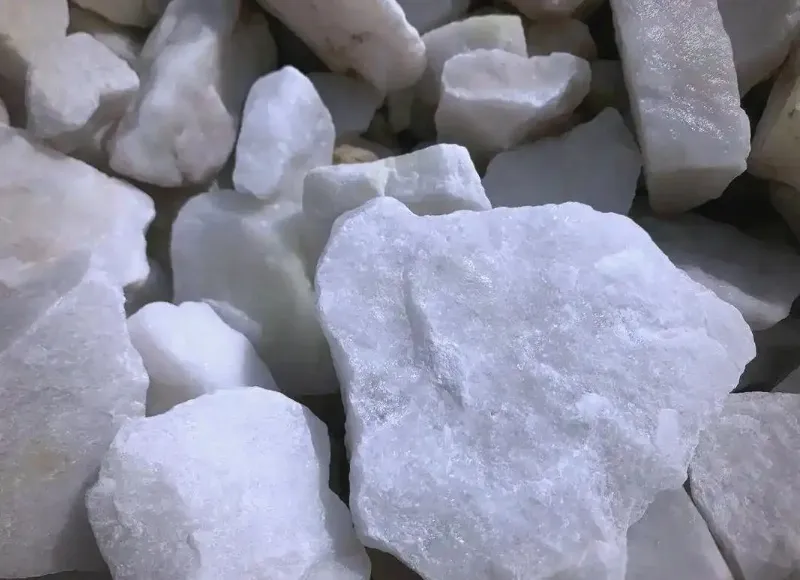
Quartz ore (SiO₂) occurs naturally in several forms, including vein quartz, pegmatite quartz, and quartzite, each with unique characteristics. Vein quartz typically offers high purity but varies significantly in grain size and hardness. Pegmatite quartz often contains impurities like feldspar or mica, which require precise classification to remove. Quartzite is extremely hard and demands robust equipment capable of withstanding intense mechanical stress. The primary goals of quartz ore processing are threefold: achieve the target particle size, remove impurities effectively, and preserve the crystalline structure. All while minimizing energy consumption and equipment wear.
Stage 1: Quartz Crushing – Liberating Impurities
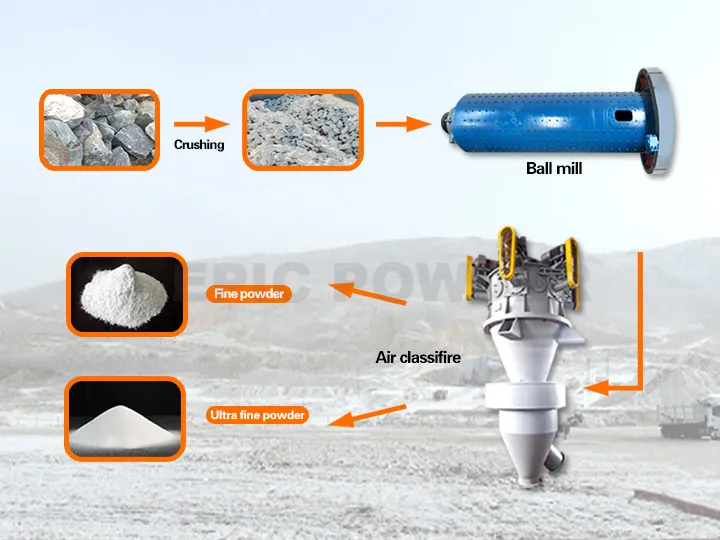
The purpose of crushing is to reduce quartz ore to a particle size that promotes the release of impurities for subsequent treatment. The key methods include mechanical crushing, high‑voltage pulse crushing, ultrasonic crushing, and thermal shock crushing.
Traditional Mechanical Crushing
The conventional approach uses jaw crushers for coarse crushing, cone crushers for medium and fine crushing, and impact crushers for fine crushing and coarse grinding. While effective and cost‑efficient, mechanical crushing has two main drawbacks. It produces irregular, angular particles and risks iron contamination from equipment wear.
Advanced Crushing Technologies
To reduce iron pollution and improve impurity liberation, several advanced methods are available, though they often come at a higher operational cost. High‑voltage pulse crushing uses shockwaves from electrical discharges to break rock along grain boundaries. This method offers selective breakage that maximizes impurity release, produces a spherical particle shape with better morphological preservation, operates dust‑free (processing occurs in water medium), and results in lower K, Ti, and Fe impurity levels compared to mechanical methods. Research has demonstrated that high‑voltage pulse crushing can effectively separate trace impurity minerals with content below 1% in quartz.
Ultrasonic crushing leverages cavitation—the formation and collapse of microscopic bubbles in a liquid medium. The collapse generates immense localized pressure that effectively scrubs impurities from particle surfaces. Thermal crushing, on the other hand, involves heating quartz ore to a specific temperature, causing expansion or phase change that creates micro‑cracks throughout the material. These cracks greatly reduce mechanical strength, making subsequent crushing easier.
Stage 2: Quartz Grinding – Achieving Precision Fineness

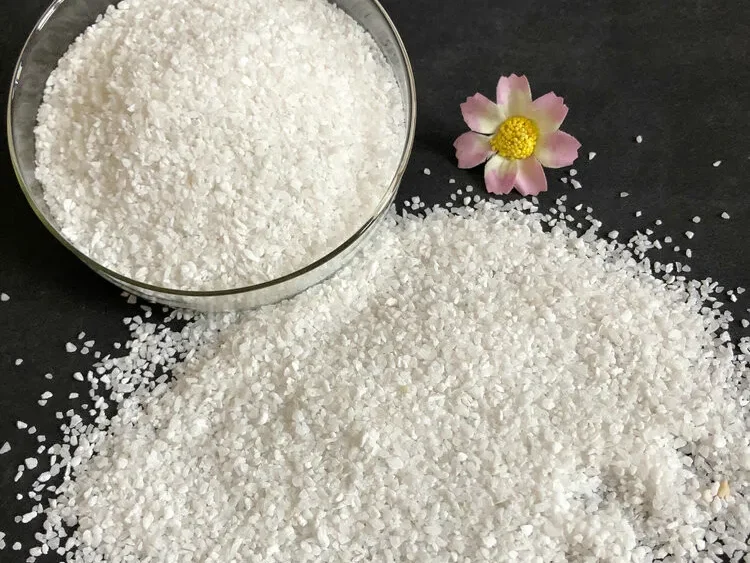
After crushing, quartz enters the fine grinding stage. The objective is to reduce particle size from millimeters to microns or even nanometers, depending on the final application.
Ball Mill + Classifier Systems
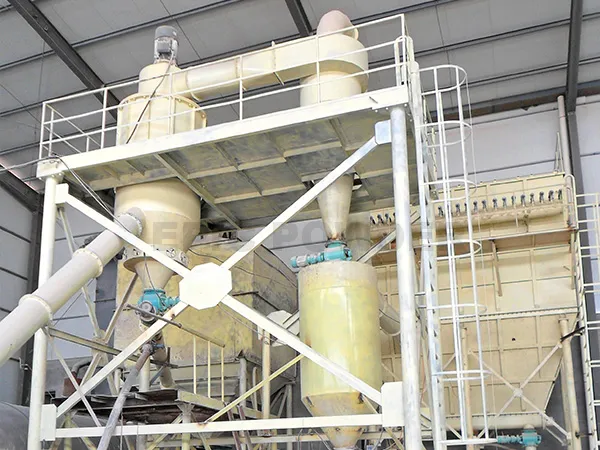
bu bilyalı değirmen paired with a high‑efficiency hava sınıflandırıcı is widely considered ideal for ultra‑fine quartz grinding. This system offers high product whiteness, excellent particle shape and gloss, stable quality indicators, and precise control over particle size distribution. However, because ball mills and classifiers are typically produced by different manufacturers, matching them properly is critical. Mismatched systems can result in functional constraints, high energy consumption, and low efficiency. Proper matching, by contrast, allows each component to leverage its strengths for maximum overall system performance.
Wear Protection – A Critical Consideration
Quartz’s high hardness causes severe wear on equipment and can easily introduce metallic impurities such as iron, degrading product purity. To prevent re‑contamination, all cavities, pipes, and stationary parts should be lined with ceramic or organic wear‑resistant materials. Ball mills typically use alumina liners or ball stone liners, and grinding media should be zirconia balls or agate to minimize iron or aluminum contamination. For electronic‑grade high‑purity silicon micropowder, full ceramic lining is often required.
The Role of Grinding Aids
When fine grinding is required, relying solely on the grinding action of the media often cannot achieve the desired fineness. Adding grinding aids can reduce slurry viscosity, improve fluidity, and increase the yield of qualified particle size products. Common grinding aids include triethanolamine, DA dispersant, stearic acid, ammonium chloride, sodium chloride, alcohols, sodium oleate, sodium silicate, and dodecylamine, among others.
Parçacık Boyutu Kontrolü
Different industries and applications have clear specifications for quartz particle size distribution. For example, semiconductor quartz crucibles require particle sizes between 0.180 and 0.125 mm, while electronic packaging materials often demand D50 values stably maintained between 3 and 4 μm, and copper‑clad plate preparation requires precise ultrafine quartz powder. The key is to avoid over‑grinding—which wastes energy and can introduce unwanted fine particles—while ensuring the target size range is consistently achieved. Modern processing lines integrate air classifiers that automatically separate qualified particles during grinding, improving both efficiency and yield.
Why Choose EPİK Toz for Your Quartz Processing Needs
At EPIC Toz Makinaları, we specialize in complete quartz processing solutions, from ultra‑fine grinding and classification. Our systems are engineered to handle quartz’s hardness while minimizing contamination. We offer ceramic‑lined jet mills for zero‑contamination ultra‑fine grinding, high‑efficiency air classifiers for precise particle size control, and complete production lines with properly matched components for optimal performance. Whether you’re producing quartz powder for semiconductors, photovoltaics, optical glass, or advanced ceramics, we have the technology and expertise to deliver consistent, high‑purity results.
Ready to optimize your quartz processing line? Contact our team for a customized solution tailored to your specific material and production requirements.

"Okuduğunuz için teşekkürler. Umarım makalem yardımcı olur. Lütfen aşağıya yorum bırakın. Ayrıca EPIC Powder online müşteri temsilcisiyle iletişime geçebilirsiniz. Zelda Daha fazla bilgi için.”
— Jason Wang, Mühendis