Quartz features prominently in our daily lives and tech news. From the crystal oscillators in watches to kitchen countertops, it seems we can’t do without it. As for fused quartz, the name sounds as if it’s simply quartz that’s been melted down. But the truth is far more complex. They are not the same thing at all: one is a natural crystal, while the other is a man-made glass. This fundamental difference makes their properties vastly different.
01 Fundamental Differences
The distinction between the two lies in the order of their atomic arrangements.
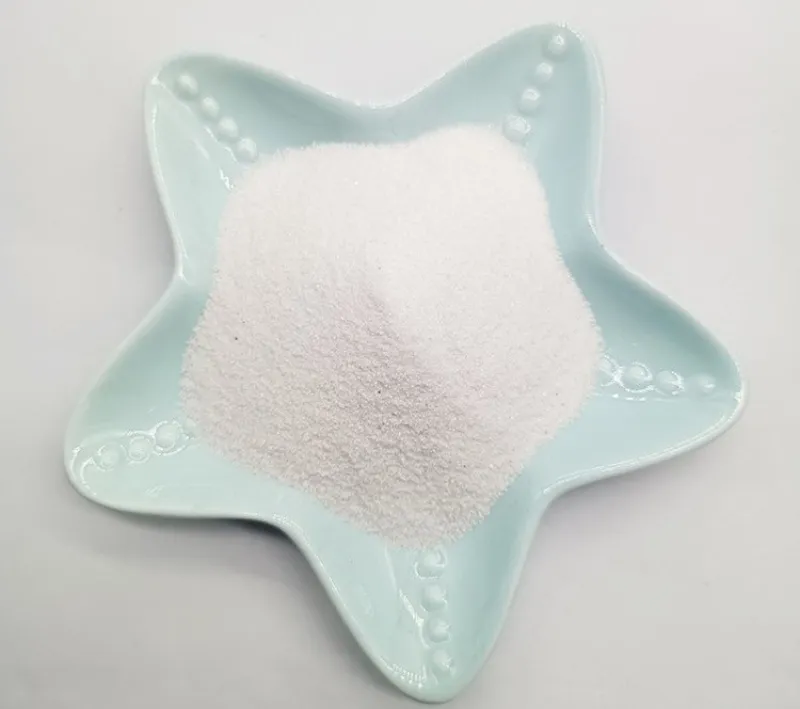
Quartz is a naturally formed crystalline mineral. Deep within the Earth’s crust, there are many geological processes over hundreds of millions of years. Silicon dioxide molecules bond together to form an extremely regular three-dimensional lattice. Fused quartz, on the other hand, is a synthetic amorphous glass. Depending on the manufacturing process, the required temperatures vary. When natural quartz is directly melted, it must be heated to approximately 1750–1900°C. In contrast, more advanced synthetic methods involve the direct hydrolysis and deposition of high-purity gaseous silicon sources (such as silicon tetrachloride, SiCl₄) into a glassy mass within a high-temperature flame at approximately 1500–1600°C, without relying on a melt-and-solidify process. The atoms are frozen before they have time to align properly, resulting in an amorphous structure characterized by long-range disorder and short-range order. Scientifically, it is regarded as a supercooled liquid.
This distinction between ordered and disordered molecular arrangements is the starting point for all differences in performance.
02 Differences in Purity
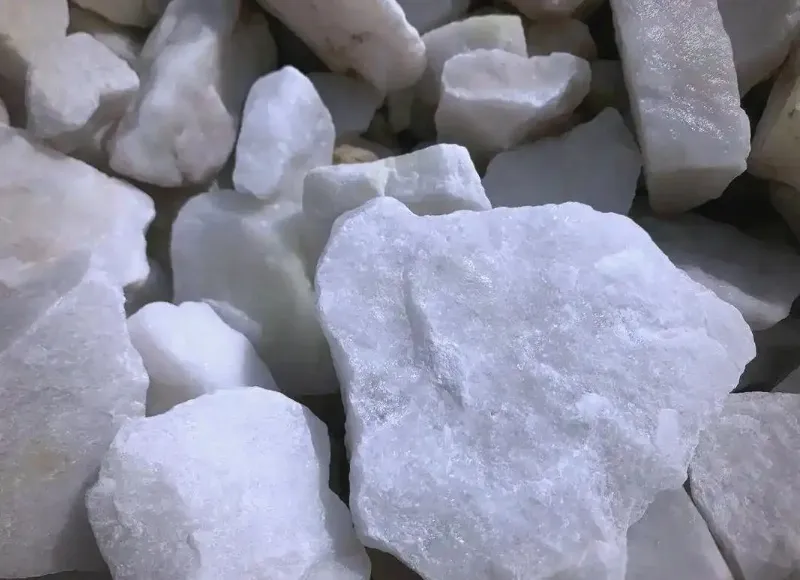
Natural quartz always contains impurities. During the growth of quartz crystals, elements such as aluminum, sodium, and iron from the surrounding environment easily incorporate into the crystal lattice, resulting in a silicon dioxide purity typically around 99%. This can lead to defects in certain applications. For example, Fe²⁺ ions cause selective coloring in the visible light spectrum, while hydroxyl (OH⁻) groups introduce additional light absorption losses in the deep ultraviolet spectrum.
Fused quartz uses highly purified synthetic raw materials, and impurities are further removed during the manufacturing process. The final product can achieve a silicon dioxide purity of over 99.99%, with impurity levels measured in parts per billion (ppb). This near-chemically pure state confers numerous unique properties.
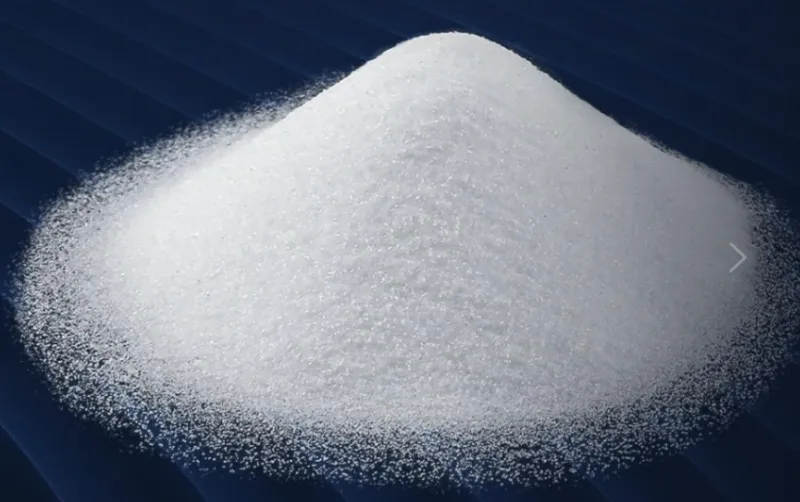
03 Optical and Thermal Properties
1. UV Transmittance in Contact Mode
When comparing a standard quartz crystal with a high-purity synthetic fused quartz, the difference in transmittance in the near-ultraviolet (NUV) range (300–400 nm) is not significant; optical-grade natural quartz remains suitable for use in this range. The true dividing line lies in the deep ultraviolet (DUV, <250 nm) range: due to impurities such as Fe and Al, as well as lattice defects, natural quartz exhibits a sharp increase in absorption in the deep UV band, rendering it unsuitable for such applications; in contrast, high-purity synthetic fused quartz allows deep UV light (down to 185 nm or even shorter wavelengths) to pass through almost unimpeded. This is why it is indispensable in the illumination optical paths of semiconductor lithography systems, ArF excimer laser (193 nm) systems, and precision deep-ultraviolet optical lenses.
2. Thermal Stability
Natural quartz faces a dual threat. First, the anisotropy of thermal expansion in its crystal structure—approximately 13.7×10⁻⁶/K along the a-axis and 7.1×10⁻⁶/K along the c-axis. During rapid cooling or heating, uneven internal stresses can easily cause cracking; ancient miners exploited this principle by setting fire to quartz veins and then quenching them with water. Second, and more critically, quartz undergoes an α-β phase transition at 573°C, accompanied by a sudden volume change of approximately 0.8%. This means that once the temperature crosses this threshold, quartz suffers irreversible structural damage—a fundamental flaw that cannot be fully avoided, no matter how slowly the heating is conducted.
Fused quartz, however, is exceptionally stable. The fundamental reason lies in the high flexibility of the amorphous Si-O-Si bond angles. Its unique phonon vibration modes generate a lateral contraction effect during heating. It offsets normal thermal expansion. This ultimately results in a thermal expansion coefficient as low as approximately 0.55×10⁻⁶/K—among the lowest of any engineering material. It is roughly one-twentieth that of ordinary glass and involves absolutely no crystalline phase transitions. Even if you heat it until it glows red and then plunge it directly into ice water, it will emerge unscathed. This exceptional thermal shock resistance makes it an ideal material for spacecraft windows, optical fiber drawing, and semiconductor processes where extreme temperature fluctuations must be withstood.
04 Piezoelectricity, Hardness, and Other Properties
Another remarkable property of quartz crystals is the piezoelectric effect. When pressure is applied, a voltage is generated across its ends; when an electric current is applied, it vibrates with precision. This is precisely because its ordered crystal lattice belongs to a non-centrosymmetric space group (trigonal crystal system, point group 32). External forces cause the centers of positive and negative charges to shift relative to one another, resulting in a macroscopic voltage. This principle is utilized in quartz watches and clock oscillators in electronic devices.
In fused quartz, however, the atoms are randomly arranged and statistically isotropic, so the centers of positive and negative charges always coincide, rendering the piezoelectric effect nonexistent. It becomes a super-stable insulator, thereby achieving better chemical inertness and optical homogeneity. In terms of mechanical properties, the difference between the two is not as great as one might imagine. Quartz crystals have a Mohs hardness of approximately 7, while fused quartz (quartz glass) also ranges between 6.5 and 7 on the Mohs scale, with a Vickers hardness of about 950–1000 HV—comparable to single-crystal quartz.
05 Concept Clarification
In professional circles, when people mention fused quartz, it’s best to ask: “What raw materials and methods were used to produce it?” This is because the Chinese and English terminology can easily be confused in this context, and this distinction directly determines the material’s performance grade.
Materials prepared using high-purity chemical raw materials (such as SiCl₄) via chemical synthesis routes like gas-phase flame hydrolysis are referred to in English as “Fused Silica,” or synthetic fused quartz. It offers the highest purity and optimal deep-ultraviolet transmittance, with precisely controllable OH⁻ content. This makes it a top-tier material in the optical and semiconductor fields.
Products directly smelted from high-purity natural quartz crystals are called “Fused Quartz,” or natural fused quartz. Its performance far exceeds that of natural crystal. However, its purity and deep-ultraviolet transmittance are inferior to synthetic products, and its OH⁻ content is typically higher. So its cost falls between the two.
Together, these are collectively referred to as quartz glass, a general term for all high-purity amorphous silicon dioxide products. The distinction between Fused Silica and Fused Quartz is a fundamental standard in the industry. When purchasing optical components or reading technical literature, these two terms must never be used interchangeably.
So fused quartz is not quartz, but a pure form of glass. In different contexts, it may represent the pinnacle of thermal insulation, deep-ultraviolet transmittance, or chemical inertness.
06 From Minerals to Materials
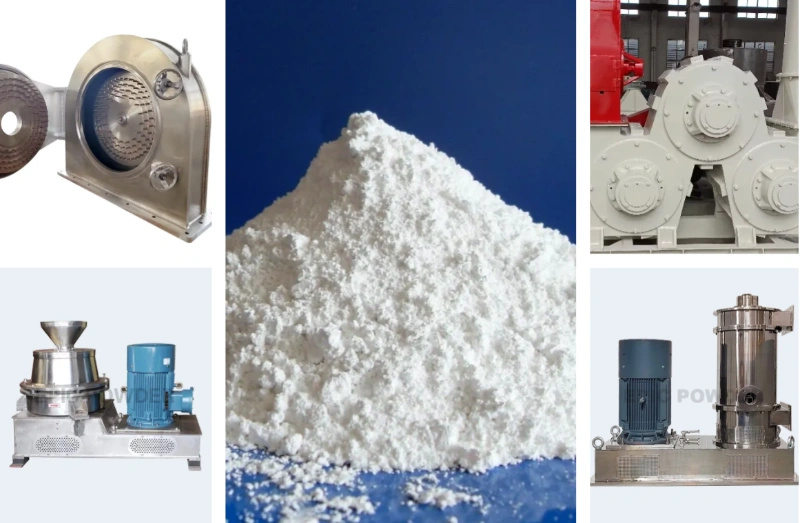
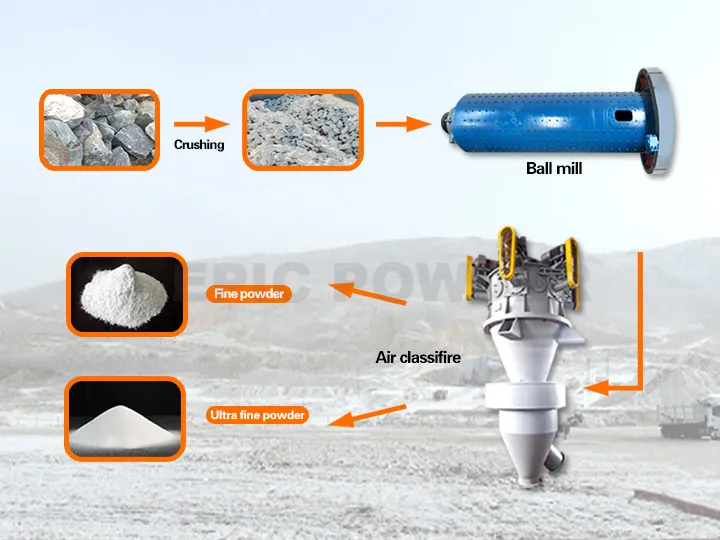
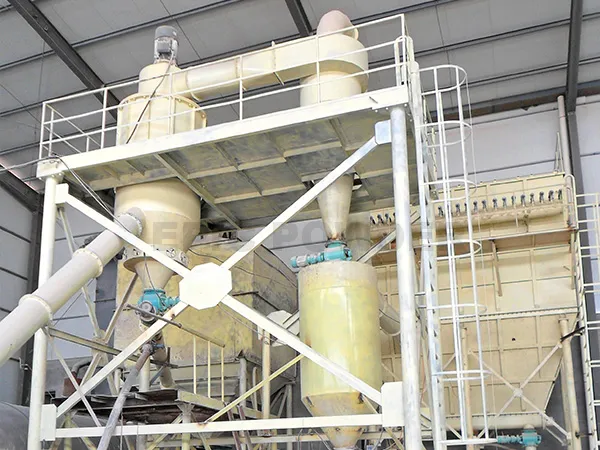
Understanding the differences between natural quartz and fused quartz is essential — but how do these raw materials actually become the high‑purity powders used in fiber optics, semiconductor lithography, or spacecraft windows? Advanced powder processing equipment bridges the gap between geological minerals and industrial‑grade materials.
From coarse crushing to micron‑level ultrafine grinding, from precise classification to surface modification, modern powder engineering transforms quartz sand into functional fillers that power tomorrow’s technologies. The table below maps key equipment technologies to the quartz‑related applications discussed in this article:
| Processing Stage | Equipment Type | Key Advantage | Relevance to This Article |
| Ultrafine Grinding | Fluidized Bed Jet Mill (e.g., MQW Series) | Zero metal contamination (Fe₂O₃ < 5 ppm); narrow particle size distribution; ideal for Mohs hardness 7 materials | Produces high‑purity quartz powder for optical lenses, semiconductor lithography components, and electronic packaging materials |
| Grinding + Classification | Ball Mill + Air Classifier (e.g., ITC Series) | Controlled particle size (D97 from 3 μm to 75 μm); low energy consumption; high purity with ceramic lining options | Delivers consistent ultrafine quartz powders for photovoltaic crucibles, precision ceramics, and engineered stone slabs |
| Powder Classification | Dynamic Air Classifier | Achieves D50 1–35 μm with Span < 1.2; fully ceramic construction prevents metal contamination | Ensures the tight particle size distribution required for filler materials in epoxy molding compounds and 5G composites |
| Surface Modification | Turbo Mill / Pin Mill Coating System | One‑step grinding + coating; activation index ≥ 96%; strong shear force breaks down tough particles | Creates functionalized quartz powder with enhanced compatibility for polymer matrices — critical for epoxy‑based 5G laminates and advanced composite applications |
| Pneumatic Conveying | Dense‑Phase / Lean‑Phase Conveying Systems | Closed‑loop operation prevents contamination; gentle handling preserves particle integrity | Transports finished high‑purity quartz powder without introducing impurities or damaging fragile ultrafine particles |
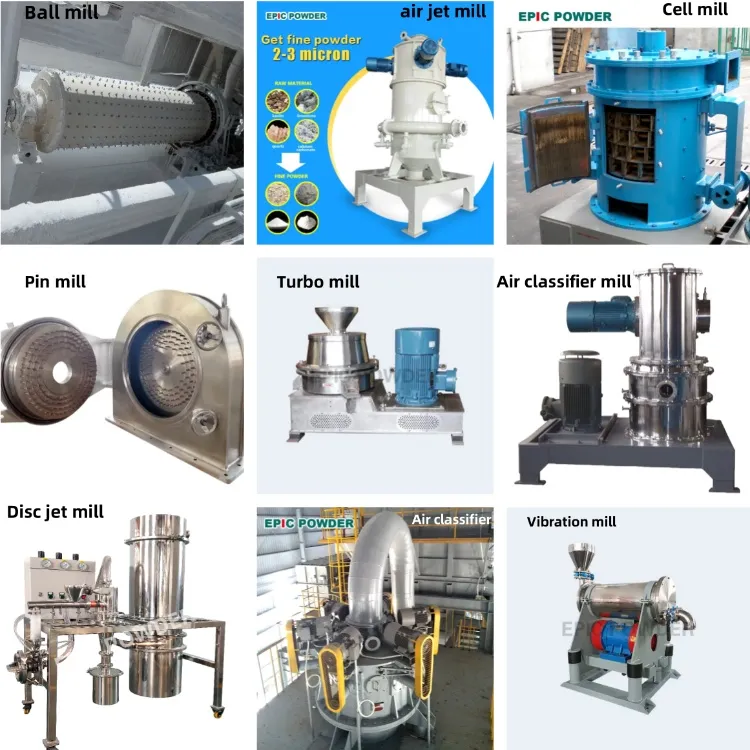
Whether you are processing natural crystalline quartz or producing synthetic fused silica, selecting the right grinding, classification, and coating equipment determines the final product’s purity, consistency, and performance.
Conclusion
Quartz originates from the earth, embodying a natural beauty of imperfection. Fused quartz is man-made, pursuing a state of pure perfection. This difference allows them to play irreplaceable roles in the clocks, satellites, optical fibers, and lithography machines of human civilization.
EPIC Powder
Epic Powder offers a wide range of equipments and tailor solutions to meet your specific needs. Our team has more than 20 years experience in various powders processing. We are specialized in fine powder processing technology for mineral industry, chemical industry, food industry, pharama industry, etc.
Contact us today for a free consultation and customized solutions!

“Thanks for reading. I hope my article helps. Please leave a comment down below. You may also contact EPIC Powder online customer representative Zelda for any further inquiries.”
— Emily Chen, Engineer