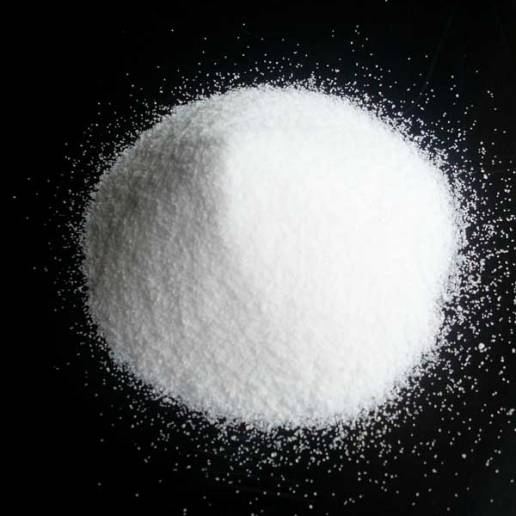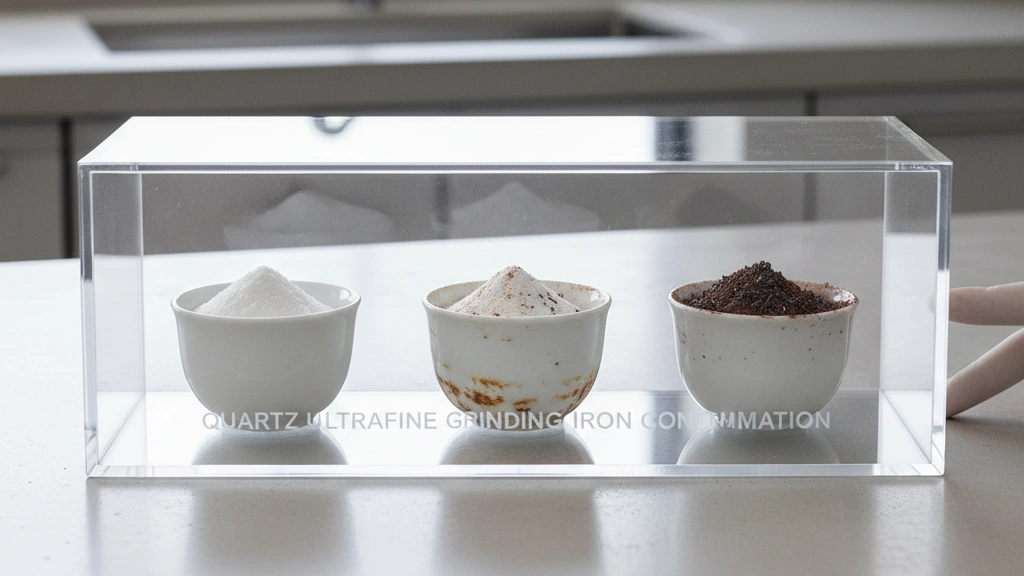
El dióxido de silicio (SiO₂) constituye la estructura básica del vidrio, proporcionando una alta resistencia mecánica y una excelente estabilidad química. Por ello, la arena de cuarzo es la materia prima mineral industrial más importante en la industria del vidrio. Se utiliza como ingrediente principal en una amplia gama de productos, desde vidrio plano y vidrio para envases hasta vidrio ultratransparente, vidrio fotovoltaico e incluso vidrio de cuarzo.
Para los fabricantes de vidrio, la calidad de la arena de cuarzo determina directamente la calidad del producto final. La industria evalúa la arena de cuarzo principalmente a través de tres criterios fundamentales:
– Composición química – niveles de pureza e impurezas, especialmente de hierro y alúmina.
– Consistencia y estabilidad – Calidad uniforme entre lotes.
– Distribución del tamaño de las partículas – El tamaño y la forma de grano adecuados para una fusión eficiente y una homogeneidad óptima.
Sin embargo, no todos los vidrios son iguales, y cada tipo de producto de vidrio requiere un tipo diferente de arena de cuarzo. Analicemos cómo varían estos requisitos en las principales categorías de vidrio.
1. Clasificación de la arena de cuarzo para la industria del vidrio.
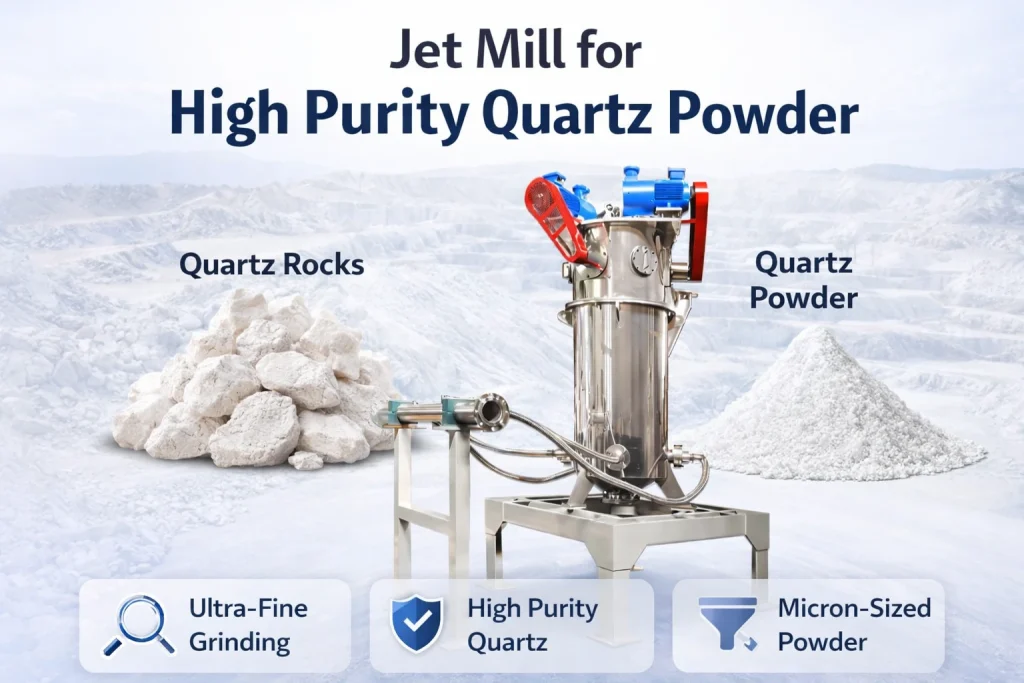
La norma industrial china define el sistema de clasificación y los métodos de ensayo para la arena de cuarzo procesada que se utiliza en todo tipo de fabricación de vidrio. Esta norma sigue siendo una referencia fundamental para proveedores y fabricantes de vidrio, ayudándoles a seleccionar la arena adecuada para cada aplicación.
| Calificación | Nombre | SiO₂ ≥ (%) | Fe₂O₃ (ppm) | Cr (ppm) | Al (ppm) | Ti (ppm) | Li (ppm) | Na (ppm) | K (ppm) | Pérdida por ignición ≤ (%) |
| 1 | Arena de cuarzo ultrapura | 99.98 | 2 | 0.5 | 30 | 2 | 3 | 3 | 3 | 0.1 |
| 2 | Arena de cuarzo de alta pureza | 99.98 | 4 | 0.5 | 70 | 3 | – | – | – | – |
| 3 | Arena de cuarzo flotante | 99.95 | 20 | 1.0 | – | 5 | – | – | – | – |
| 4 | Arena de cuarzo lavada con ácido | 99.6 | 50 | 2.0 | – | 300 | – | – | – | – |
| 5 | Arena de cuarzo con vidrio cristalino | 99.0 | 200 | 2.0 | – | – | – | – | – | – |
| 6 | Arena de cuarzo para vidrio de laboratorio | 99.0 | 300 | 2.0 | – | – | – | – | – | – |
| 7 | Arena de cuarzo común | 98.5 | 400 | 6.0 | – | – | – | – | – | – |
| 8 | Arena de cuarzo general | 98.5 | 600 | 6.0 | – | – | – | – | – | – |
| 9 | Arena de cuarzo refractaria | 97.0 | 2000 | – | – | – | – | – | – | – |
2. Vidrio plano
El vidrio plano abarca una amplia gama de aplicaciones posteriores, y las especificaciones para la arena de cuarzo pueden variar en consecuencia. En términos generales, el sector del vidrio plano clasifica la arena de cuarzo en dos tipos según su composición química y tamaño de grano:
- Tipo I: Bajo contenido de Al₂O₃
- Tipo II: Mayor contenido de Al₂O₃
La norma profesional JC/T 529-2000 “Materias primas silíceas para vidrio plano” establece requisitos detallados para la composición química y la distribución del tamaño de partícula. Los parámetros clave son los siguientes:
Composición química y requisitos de humedad para la arena de cuarzo plana para vidrio.
| Grado de arena de cuarzo | w(SiO₂) / % | w(Al₂O₃) / % | w(Fe₂O₃) / % | w(H₂O) / % |
| Clase I | ≤5.00 | |||
| De primera calidad | ≥98,50 | ≤0,50 | ≤0,05 | |
| ≥98,00 | ≤1,20 | |||
| Primer grado | ≥98,50 | ≤0,70 | ≤0,10 | |
| ≥97,50 | ≤1,20 | |||
| Segundo grado | ≥98,00 | ≤0,70 | ≤0,15 | |
| ≥96,50 | ≤1,50 | |||
| Tercer grado | ≥98,00 | ≤0,70 | ≤0,20 | |
| ≥96,50 | ≤1,50 | |||
| Clase II | ||||
| Primer grado | ≥92,00 | ≤4,00 | ≤0,20 | |
| Segundo grado | ≥90,50 | ≤4,50 | ≤0,30 |
Variación admisible en la composición química de la arena de cuarzo plana para vidrio.
| Grado de arena de cuarzo | Variación de SiO₂ / % | Variación de Al₂O₃ / % | Variación de Fe₂O₃ / % |
| Clase I | |||
| De primera calidad | ±0,20 | ±0,10 | ±0,01 |
| Primer grado | ±0,30 | ±0,15 | – |
| Segundo grado | ±0,30 | ±0,20 | – |
| Tercer grado | ±0,30 | ±0,20 | – |
| Clase II | |||
| Primer grado | ±0,30 | ±0,20 | – |
| Segundo grado | ±0,30 | ±0,20 | – |
Requisitos de distribución del tamaño de partícula para arena de cuarzo plana para vidrio.
| Grado de arena de cuarzo | +1 mm | +710 μm | +500 μm | –100 μm (–125 μm) |
| Clase I | ||||
| De primera calidad | ≤0 (0) | ≤0,5 (0,5) | ≤5,0 (5,0) | ≤5,0 (5,0) |
| Primer grado | ≤0 (0) | ≤0,5 (0,5) | ≤5,0 (5,0) | ≤10,0 (5,0) |
| Segundo grado | ≤20,0 (8,0) | |||
| Tercer grado | ||||
| Clase II | ||||
| Primer grado | ≤0 (0) | ≤0,5 (0,5) | ≤5,0 (5,0) | ≤5.0 |
| Segundo grado | ≤0 (0) | ≤0,5 (0,5) | ≤5,0 (5,0) | ≤5.0 |
Nota: Los valores entre paréntesis indican los requisitos para los productos de arena de sílice natural.
3. Vidrio para envases y uso doméstico
Los productos de vidrio para uso doméstico y envasado incluyen botellas y frascos, vajilla, material de laboratorio y vidrio farmacéutico. Se utilizan en las industrias alimentaria, de bebidas, de alcohol y médica. La arena de cuarzo constituye una gran proporción de la mezcla de materiales en este segmento.
Dado que la temperatura de fusión de la arena de cuarzo ronda los 1730 °C, el tamaño de las partículas influye enormemente en la formación del vidrio y la eficiencia de la fusión. En la producción, se suelen preferir las partículas de cuarzo angulares, ya que su mayor superficie ayuda a prevenir la segregación de los lotes. El rango óptimo de tamaño de partícula para esta aplicación suele ser de 60 a 140 mallas.
Para vajillas finas y cristalería para instrumentos, la especificación de exploración geológica DZ/T 0207-2002 establece los requisitos de calidad para las materias primas silíceas.
Requisitos de calidad para la arena de cuarzo utilizada en material de vidrio de laboratorio.
| Elemento / Parámetro | Primer grado | Segundo grado | Tercer grado |
| Composición química | |||
| w(SiO₂) / % | >99 | >96 | >90 |
| w(Al₂O₃) / % | <1.0 | <2.0 | <4.0 |
| w(Fe₂O₃) / % | <0,05 | <0,10 | <0,35 |
| w(Cr₂O₃) / % | <0,001 | – | – |
| Observaciones | Cristalería (excluyendo el vidrio cristalino) | Vidrio de laboratorio general, vidrio incoloro | Se utiliza para el vidrio de botellas comunes. |
4. Cristal ultratransparente
El vidrio ultratransparente es un material de primera calidad conocido por su altísima transmitancia de luz (≥91,51 TP3T), su bajísimo contenido de hierro (normalmente entre 100 y 150 ppm) y su claridad cristalina. También se le conoce como vidrio de bajo contenido en hierro o vidrio de alta transparencia.
La producción de vidrio ultratransparente requiere una combinación precisa de materias primas, entre las que se incluyen arena de cuarzo, feldespato, dolomita, caliza, carbonato de sodio, hidróxido de aluminio, torta de sal, piroantimoniato de sodio y trióxido de antimonio. De estas, el SiO₂ constituye aproximadamente entre el 71,0 % y el 73,01 % de la mezcla, y las impurezas nocivas, en particular el hierro, se introducen casi por completo a través de la arena de cuarzo. Por lo tanto, la purificación de la arena de cuarzo se centra principalmente en la eliminación de las impurezas de hierro.
Cuando el contenido de hierro supera cierto umbral, no solo disminuye significativamente la transmisión de luz, sino que los óxidos de hierro también absorben la radiación térmica durante el proceso de fusión. Esto crea un fuerte gradiente de temperatura entre las capas superior e inferior del vidrio fundido, lo que dificulta la convección y complica enormemente la fusión y el refinado. Por esta razón, el contenido de hierro de la materia prima de sílice es el parámetro de diseño más crítico. Los requisitos típicos de hierro para la arena de cuarzo utilizada en vidrio ultratransparente son:
– Fe₂O₃ ≤ 150 ppm
– Fe ≤ 80 ppm
Entre los materiales de cuarzo natural utilizados se incluyen arena de cuarzo natural, arenisca de cuarzo, cuarcita y cuarzo filoniano.
Valores de control para óxidos activos e impurezas nocivas en materias primas para vidrio ultrablanco (Unidad: wt%)
| Materia prima | SiO₂ | Al₂O₃ | Fe₂O₃ | CaO | MgO | Na₂CO₃ | TiO₂ | NaCl |
| Arena de cuarzo | ≥98,5 ±0,3 | ≤1,0 ±0,q | ≤0,01 ±0,001 | ≤0,1 ±0,01 | ||||
| Feldespato | <70 ±0,6 | ≥15 ±0,25 | <0,15 ±0,05 | |||||
| Dolomita | ≥30 ±0,3 | ≥20 ±0,3 | ||||||
| Caliza | ≤0,018 | ≥52 | ||||||
| Mástil pesado | ≤0,001 | >99,0 ±0,1 | <0,3 | |||||
| Alúmina | ≥63,5 ±0,1 | ≤0,001 | ||||||
| Sal de Glauber (Na₂SO₄) | Fe₂O₃ ≤0,001 | Na₂SO₄ ≥99 ±0,1 | ||||||
| Antimoniato de sodio (Na₃SbO₄) | Fe₂O₃ ≤0,055% | Sb₂O₅ ≥64% | ||||||
| Trióxido de antimonio (Sb₂O₃) | ||||||||
Notas: El estándar utilizado es el estándar nacional de Sb₂O₃ de grado 0. El componente principal de la materia prima es ≥99,5%. El tamaño promedio de partícula es de 1,3 a 1,5 μm, el diámetro promedio de 0,3 a 0,35 μm y el tamaño máximo de partícula se controla dentro de 5 μm.
5. Vidrio fotovoltaico (solar)
El vidrio fotovoltaico se instala como la capa más externa de los módulos solares. Su función es proteger las células solares y los electrodos, impidiendo la entrada de humedad y gases corrosivos, a la vez que permite el paso de la máxima cantidad de luz solar. En comparación con el vidrio común, el vidrio fotovoltaico debe ofrecer un menor contenido de hierro, una mayor transmitancia de luz, resistencia al impacto, resistencia a la corrosión y estabilidad térmica.
Dos tipos de vidrio satisfacen estas necesidades: el vidrio flotado ultratransparente y el vidrio laminado ultratransparente. El vidrio laminado es la opción más común para las células solares de silicio cristalino, mientras que el vidrio flotado se utiliza con mayor frecuencia para los módulos solares de película delgada.
Los iones de hierro en la arena de cuarzo pueden causar fácilmente decoloración, lo que reduce la transmitancia solar. Por lo tanto, el vidrio fotovoltaico requiere arena de cuarzo con alta pureza de sílice y niveles muy bajos de impurezas, específicamente arena de cuarzo con bajo contenido de hierro. La norma industrial JC/T 2314-2015 «Materias primas silíceas para vidrio fotovoltaico» define las especificaciones de calidad pertinentes.
Requisitos de calidad para el material de alúmina-sílice
| Elemento / Parámetro | Primer grado | Segundo grado |
| SiO₂ / % ≥ | 99.5 | 99.0 |
| Al₂O₃ / % ≤ | 0.20 | 0.50 |
| TiO₂ / mg/kg ≤ | 10 | 20 |
| Fe₂O₃ / mg/kg ≤ | 60 | 80 |
| Cr₂O₃ / mg/kg ≤ | 2 | 5 |
| Residuo en tamiz de 1,0 mm / % | 0 | 0 |
| Residuo en tamiz de 0,6 mm / % ≤ | 1.5 | 1.5 |
| Residuo en tamiz de 0,1 mm / % ≤ | 5.0 | 5.0 |
| Absorción de agua / % ≤ | 5.0 | 5.0 |
6. Vidrio de cuarzo
El vidrio de cuarzo es la joya de la corona de los materiales de vidrio. Se trata de un vidrio monocomponente de SiO₂ que posee excepcionales propiedades mecánicas, térmicas, ópticas y eléctricas. Desempeña un papel insustituible en semiconductores, dispositivos ópticos, comunicaciones ópticas y aplicaciones de energía solar.
En la actualidad, la arena de cuarzo de alta pureza ha sustituido al cristal natural como materia prima principal para la fundición de vidrio de cuarzo. Tanto en los procesos de fusión eléctrica como en los de fusión por llama, la arena de cuarzo de alta pureza es el material de partida indispensable para la producción de tubos, varillas y lingotes de vidrio de cuarzo.
Propiedades y características
| No. | Propiedad | Características / Rasgos |
| ① | Buena transparencia óptica | Transmitancia extremadamente alta en los espectros UV, visible e IR: transmitancia UV >80%; transmitancia de luz visible >92% |
| ② | Resistencia a altas temperaturas | Punto de reblandecimiento: 1730 °C. Temperatura de uso a largo plazo: hasta 1100 °C. Temperatura de uso a corto plazo: hasta 1450 °C. |
| ③ | Resistencia a la corrosión | Resistente al ácido fluorhídrico y al ácido fosfórico caliente; prácticamente no reacciona con otros ácidos. |
| ④ | Capacidad de alto vacío | El vacío puede alcanzar 10⁻⁶ Pa |
| ⑤ | Excelente aislamiento eléctrico | Resistividad: 1,8 × 10¹⁹ Ω·cm a 20 °C; 1,6 × 10¹⁶ Ω·cm a 800 °C |
| ⑥ | Baja dilatación térmica | Puede soportar cambios bruscos de temperatura; aproximadamente 1/20 de la resistencia del vidrio común. |
¡Por supuesto! Aquí tienes tus dos tablas formateadas correctamente en Markdown, listas para copiarlas directamente a tu sitio web:
Tabla 5-1: Requisitos de elementos de impureza de la arena de cuarzo para vidrio de cuarzo
| Aplicación industrial | Origen | Al (ppm) | Fe (ppm) | Ti (ppm) | Ca (ppm) | B (ppm) | K (ppm) | Na (ppm) | Li (ppm) |
|---|---|---|---|---|---|---|---|---|---|
| Fuente de luz eléctrica | Porcelana | Total 50–100 ppm | 50–100 | 50–100 | 50–100 | 50–100 | 50–100 | 50–100 | 50–100 |
| Industria química | checo | 42 | 3.0 | 3.0 | 8.0 | / | 18.0 | 5.0 | / |
| Semiconductor | Porcelana | 20 | 0.18 | 0.5 | 0.1 | 0.1 | 0.2 | 4.0 | 1.8 |
| Semiconductor (de alta calidad) | EE.UU | 15 | 0.3 | / | 0.4 | 0.1 | 0.7 | 0.9 | 0.7 |
| Semiconductor (de alta calidad) | Rusia | 14 | 0.9 | 0.4 | 0.1 | / | 0.3 | 0.6 | / |
| Tubo de fibra óptica | Brasil | 11 | 1.8 | 0.4 | 0.1 | / | 0.3 | 0.4 | / |
| Lente óptica | EE.UU | 8 | 0.05 | / | 0.7 | 0.04 | 0.05 | 0.05 | 0.2 |
Nota: Las celdas en blanco indican que no se ha especificado ningún límite o que los datos no están disponibles.
Tabla 5-2: Requisitos de tamaño de partícula de la arena de cuarzo para vidrio de cuarzo
| Proceso | Horno de resistencia | Horno de fusión continua doméstico | Horno de fusión continua extranjero | Fusión de llama oxihidrógeno | Plasma |
|---|---|---|---|---|---|
| Tamaño de partícula (malla) | 40–80 | 60–120 | 80–140 | 80–200 | 120–20 |
Cómo elegir la arena de cuarzo adecuada para su aplicación en vidrio.
Desde el vidrio plano estándar hasta los exigentes requisitos del vidrio ultratransparente, fotovoltaico y de cuarzo, la calidad de la arena de cuarzo determina directamente el rendimiento, la eficiencia y el costo del producto. Comprender los estándares exactos —que abarcan la pureza química, el contenido de hierro y el tamaño de partícula— es el primer paso para producir vidrio de calidad superior.
Polvo épico
Polvo épicoCon más de 20 años de experiencia en la industria de polvos ultrafinos, impulsamos activamente el desarrollo futuro de estos materiales, centrándonos en su trituración, molienda, clasificación y modificación. ¡Contáctenos para una consulta gratuita y soluciones personalizadas! Nuestro equipo de expertos se dedica a brindar productos y servicios de alta calidad para maximizar el valor de su procesamiento de polvos.

Gracias por leer. Espero que mi artículo te haya sido útil. Deja un comentario abajo. También puedes contactar con el servicio de atención al cliente de EPIC Powder en línea. Zelda para cualquier otra consulta.
— Jason Wang, Ingeniero
Error: No se encontró ningún formulario de contacto.