¿Qué es el polvo de cuarzo?
El polvo de cuarzo también se conoce como microesferas de sílice. Es un mineral de silicato duro, resistente al desgaste y químicamente estable, con SiO₂ como su componente mineral principal. El polvo de cuarzo es de color blanco lechoso o incoloro y translúcido. Tiene una dureza de 7 y una densidad de 2,65. Es insoluble en ácidos, ligeramente soluble en solución de KOH y tiene un punto de fusión de 1650 °C. Los productos con un tamaño de partícula generalmente inferior a 120 mallas se denominan arena de cuarzo, mientras que aquellos que superan las 120 mallas se denominan polvo de cuarzo. Según su tamaño de partícula y morfología, los polvos de cuarzo se pueden clasificar en tipos como nanosílice (humo de sílice) y polvo de sílice esférica.

Panorama general de las industrias que utilizan polvo de cuarzo
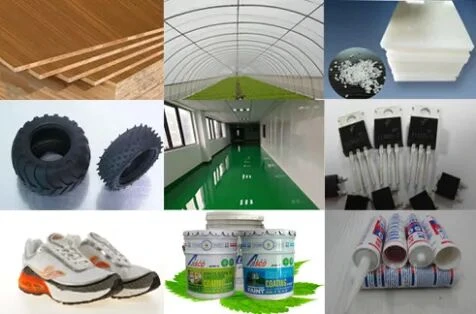
El polvo de cuarzo se utiliza en una amplia gama de industrias. En las industrias del vidrio, maquinaria, losas de cuarzo de ingeniería, cerámica, metalurgia, construcción y química, el tamaño de malla del producto varía de decenas a cientos de mallas, con diferentes requisitos de pureza. Cuando se utiliza como relleno en las industrias de plásticos, recubrimientos y adhesivos, el requisito de finura varía de cientos a miles de mallas, y el requisito de pureza es relativamente alto. En la industria de los circuitos integrados, el producto presenta los requisitos más exigentes de tamaño de malla y pureza.
Aplicaciones del polvo de cuarzo como material de relleno
Un relleno, también conocido como agente de relleno, es un material que se añade a plásticos, caucho, recubrimientos y otros productos para rellenarlos. Puede mejorar el rendimiento del material, optimizar sus características de procesamiento y reducir costes. El polvo de cuarzo tiene una amplia gama de aplicaciones como relleno, principalmente en plásticos, recubrimientos, pinturas, suelos epoxi, caucho y selladores.
1. Aplicaciones del polvo de cuarzo en plásticos
Especificaciones básicas:
Finura: 400–2500 mallas
Cuando se utiliza como relleno en plásticos, el polvo de cuarzo mejora principalmente la resistencia al desgaste, la estabilidad dimensional y la estabilidad térmica del material. Se puede emplear en productos como suelos de cloruro de polivinilo (PVC), películas de polietileno y polipropileno, y compuestos de moldeo epoxi.
El relleno de baldosas de PVC con micropartículas de sílice mejora la resistencia al desgaste del producto; en suelos de PVC, mejora la suavidad de la superficie y la resistencia a los arañazos. En láminas y tuberías de PVC resistentes a los ácidos, mejora la procesabilidad, reduce la viscosidad y aumenta la fluidez, facilitando la extrusión y el moldeo, y mejorando significativamente la resistencia a los ácidos de los productos resultantes.
Las películas agrícolas de polietileno con relleno de sílice mejoran las propiedades físicas, químicas y ópticas de los productos, mientras que el polipropileno con relleno de sílice mejora sus propiedades mecánicas. Por ejemplo, la adición de sílice mejora las propiedades de barrera infrarroja, reduce la pérdida de calor en invernaderos de plástico y mejora su aislamiento térmico. Como relleno en resina de PE, el humo de sílice ultrafino presenta buena fluidez, distribución uniforme y excelentes propiedades mecánicas.
En los compuestos de moldeo epoxi, el uso de polvo de cuarzo como relleno reduce el coeficiente de expansión térmica, la absorción de agua y la contracción durante el moldeo, a la vez que disminuye los costos; también mejora la resistencia al calor, la resistencia mecánica, las propiedades dieléctricas y la conductividad térmica.
2. Aplicaciones del polvo de cuarzo en recubrimientos
Especificaciones básicas: Finura: 400–2500 mallas; Pureza: >99,51 TP3T; Blancura: 70–94
En la industria de los recubrimientos, las características del micropulvo de sílice —incluyendo el tamaño de partícula, la blancura, la dureza, la capacidad de suspensión, la dispersibilidad, la baja absorción de aceite y la alta resistividad— contribuyen a mejorar la resistencia a la corrosión, al desgaste, las propiedades aislantes y la resistencia a altas temperaturas de los recubrimientos. Gracias a su excelente estabilidad, el micropulvo de sílice ha desempeñado un papel fundamental como relleno en los recubrimientos. En particular, para los recubrimientos de paredes exteriores, la materia prima de SiO₂ es crucial para la resistencia a la intemperie.
3. Aplicación de polvo de cuarzo en revestimientos epoxi para suelos
Especificaciones básicas: Finura: 400–1500 mallas; Pureza >99%; Blancura: 70–94
En los revestimientos epoxi para suelos, la elevada dureza de las microesferas de sílice mejora la resistencia a la abrasión, al impacto y al frotamiento. Gracias a las propiedades químicas estables del dióxido de silicio, se incrementa la resistencia a los ácidos, a los álcalis y a la corrosión de los revestimientos epoxi. En comparación con el polvo de sílice tradicional, el polvo de sílice esférico utilizado en los revestimientos epoxi para suelos presenta menor viscosidad, mejor fluidez, buena capacidad de apilamiento y facilidad de compactación. Se adhiere fácilmente a las resinas epoxi, reduciendo así la cantidad de resina necesaria.
4. Aplicaciones del polvo de cuarzo en el caucho.
Especificaciones básicas: Finura: 1250–5000 mallas; Pureza: >99,51 TP3T; Blancura: 70–94
El polvo de cuarzo rigidiza el caucho, reduce la densidad del compuesto y mejora sus propiedades de aislamiento térmico. Es adecuado para la fabricación de compuestos aislantes, productos moldeados y productos de espuma; cuando se utiliza en caucho duro, aumenta la temperatura de reblandecimiento.
En los productos de caucho resistentes al desgaste, el compuesto debe presentar una excelente permeabilidad y una fuerte adhesión. Los compuestos con sílice demuestran propiedades únicas como baja viscosidad, buena permeabilidad, excelente dispersión y fuerte adhesión. Estas características facilitan el recubrimiento del compuesto sobre el tejido y mejoran la fuerza adhesiva entre la lámina de caucho y el tejido, lo que a su vez mejora las propiedades mecánicas del producto, como la resistencia a la tracción y la deformación permanente.
La sílice es un excelente agente de refuerzo para el caucho sintético, con un rendimiento solo superado por el negro de humo. Si se trata adecuadamente, puede incluso superar al negro de humo. Por ejemplo, añadir una cierta cantidad de sílice a los neumáticos estándar puede prolongar su vida útil. En el calzado de caucho, el negro de humo blanco no solo proporciona excelentes propiedades de refuerzo, resistencia a la abrasión, resistencia al deslizamiento y adherencia superior, sino que también actúa como un eficaz material de refuerzo de color claro. Por lo tanto, desempeña un papel crucial en la mejora de la calidad y el diseño del calzado de caucho.
5. Aplicación de polvo de cuarzo en selladores
Especificaciones básicas: Finura: 1250 mallas; Pureza >99,5%; Blancura: 80–94
El polvo de cuarzo generalmente requiere modificación antes de su uso en selladores. El contenido de humedad del material tratado se controla por debajo de 0,1%. Al utilizarse en selladores, mejora la fuerza adhesiva, el límite elástico y el índice de dilución de la fuerza de corte del compuesto. Además, actúa como espesante, agente de refuerzo y proporciona resistencia al desgarro y propiedades antienvejecimiento.
Equipo recomendado por EPIC para el procesamiento de polvo de cuarzo.
EPIC Powder Machinery ofrece una gama completa de equipos diseñados específicamente para el procesamiento de polvo de cuarzo ultrafino.
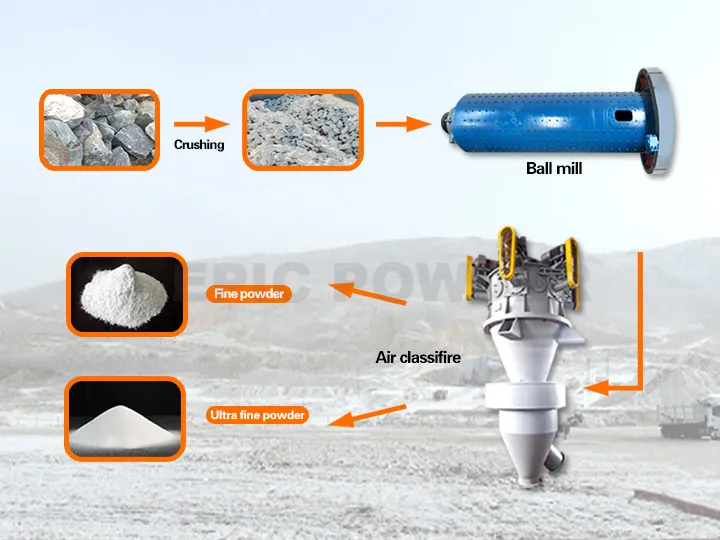
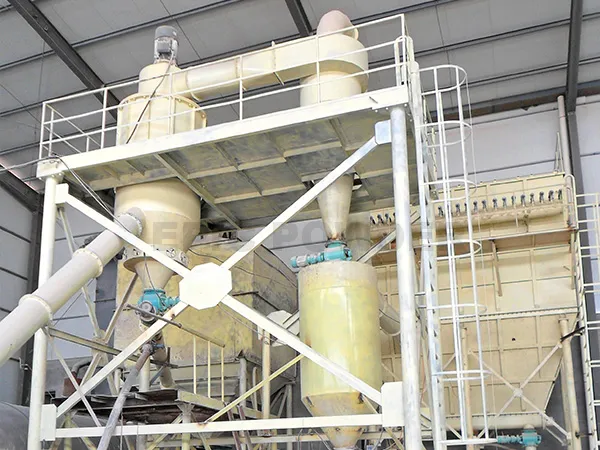
Línea de producción de molino de bolas y clasificador de aire
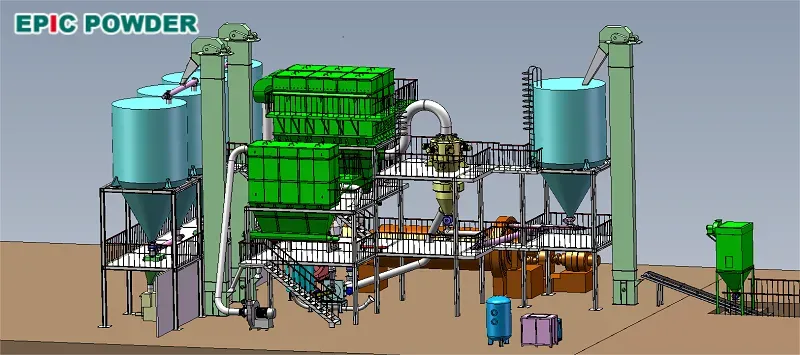
El Línea de producción de molino de bolas y clasificador de aire Es la solución estrella de EPIC para la producción a gran escala de polvo de cuarzo. Al combinar un molino de bolas especialmente diseñado con clasificadores de aire de alta eficiencia, este sistema puede producir polvo de cuarzo con una finura que oscila entre 150 y 2500 mallas (aproximadamente 5–75 μm), cubriendo perfectamente los requisitos de las aplicaciones en plásticos, recubrimientos y suelos epoxi.
Control flexible del tamaño de partícula: Se pueden combinar clasificadores simples o múltiples en paralelo o en serie para producir simultáneamente diferentes grados de tamaño de partícula.
Alta precisión de clasificación: el clasificador multirrotor alcanza una capacidad de clasificación de hasta 90% a 2 μm, lo que representa una precisión de nivel avanzado a nivel mundial.
Origen tecnológico alemán: Placas de revestimiento y medios de molienda fabricados según los estándares alemanes para una mayor vida útil y una mejor resistencia al desgaste.
Control automático: El sistema basado en PLC con interfaz de pantalla táctil garantiza una producción estable y un bajo consumo de energía.
Producción limpia: Todo el sistema funciona bajo presión negativa con emisiones de polvo inferiores a 1 mg/m³, cumpliendo con las normas medioambientales europeas.
Molino de chorro de lecho fluidizado vertical
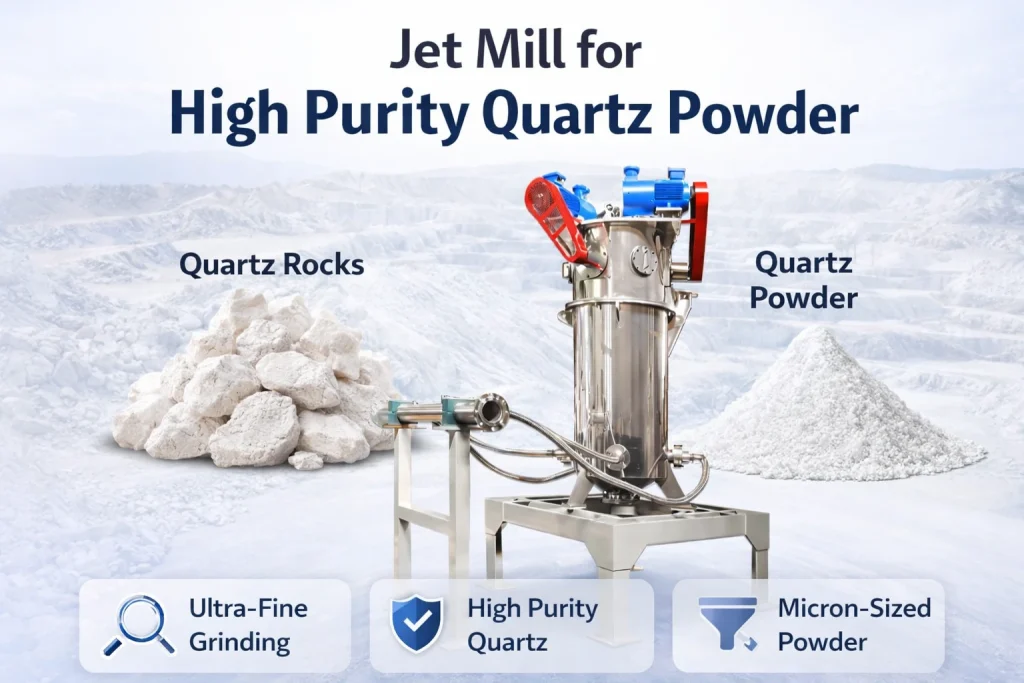
Para aplicaciones de polvo de cuarzo ultrafino que requieren la máxima finura, como rellenos de caucho (1250–5000 mallas) y aplicaciones de selladores de alta pureza. Molino de chorro de lecho fluidizado vertical Es la opción ideal. Mediante aire comprimido impulsado a través de boquillas Laval, los materiales se pulverizan mediante colisiones, fricción y cizallamiento repetidos, sin contaminación por medios de molienda.
Tamaño de partícula ultrafino: Produce polvos con un D97 que oscila entre 6 y 150 μm, cumpliendo con las especificaciones de relleno más exigentes.
Procesamiento de alta pureza: Los componentes clave (revestimiento interior, rueda clasificadora, boquilla) pueden estar fabricados de cerámica de alúmina, zirconia o carburo de silicio, lo que garantiza que no haya contacto con metales durante el fresado.
Molienda a baja temperatura: La pulverización no media a temperatura constante o baja preserva las propiedades del material.
Amplia gama de capacidades: Modelos desde 1 kg/h hasta 12.000 kg/h para satisfacer las necesidades de producción tanto a escala de laboratorio como industrial.
Sistema cerrado y respetuoso con el medio ambiente: Sistema de molienda cerrado con control mediante programa PLC para un funcionamiento limpio y eficiente.
Clasificadores de aire

EPIC clasificadores de aire Pueden utilizarse de forma independiente o integradas en una línea de producción. Proporcionan un control preciso de la frecuencia de conversión para obtener puntos de corte exactos del tamaño de partícula, lo que las hace esenciales para producir los rangos de malla específicos que requieren las diferentes aplicaciones de relleno (malla de 400 para recubrimientos, malla de 1250 para caucho y selladores, hasta malla de 5000 para compuestos de caucho especiales).
Características:
Desarrollado a partir de tecnología alemana con un diseño estructural optimizado.
Volumen de aire y parámetros de clasificación ajustables para una máxima flexibilidad.
El diseño del rotor NG mejora la precisión de la clasificación a la vez que reduce el consumo de energía.
Molino de vibración
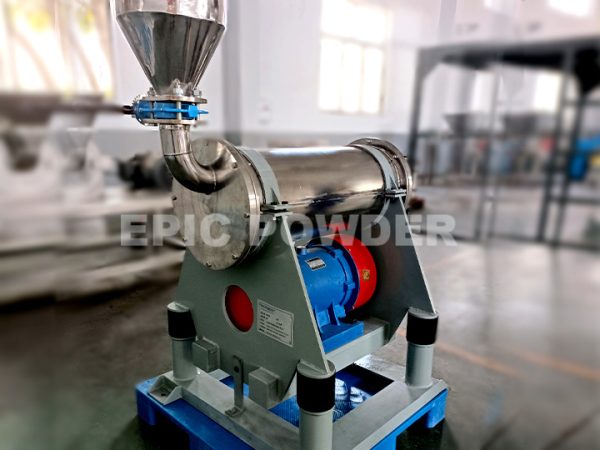
El Molino de vibración Este sistema proporciona un mecanismo de molienda alternativo para el procesamiento de cuarzo, utilizando vibración de alta frecuencia para lograr una distribución de tamaño de partícula fina y uniforme. Es particularmente eficaz para aplicaciones de finura media y puede integrarse con equipos de clasificación para ampliar la gama de productos.
¿Necesita el equipo adecuado para su polvo de cuarzo?
EPIC ofrece soluciones personalizadas adaptadas a sus necesidades específicas de tamaño de partícula, pureza y capacidad. Desde la selección del equipo hasta la instalación y la capacitación, ofrecemos un servicio integral llave en mano.
Polvo ÉPICO
Fundada en 2012 en Qingdao, China, EPIC Powder Machinery Co., Ltd. es una empresa de alta tecnología especializada en tecnología y equipos para el procesamiento de polvos ultrafinos. Con más de 20 años de experiencia en el sector, EPIC ha prestado sus servicios a clientes en diversos países y regiones del mundo.
Obtén más información sobre EPIC Powder →

Gracias por leer. Espero que mi artículo les sea útil. Dejen sus comentarios abajo. También pueden contactar a Zelda, nuestra representante de atención al cliente en línea de EPIC Powder, para cualquier otra consulta.
— Jason Wang, Ingeniero